New National Strategy Targets Cartel Supply Chains, Online Drug Sales, And Public Awareness As Fentanyl Remains The Deadliest Threat To U.S. Communities
Friday, December 5, 2025, 7:30 A.M. ET. 5 Minute Read, By Jennifer Hodges, Political Editor: Englebrook Independent News,
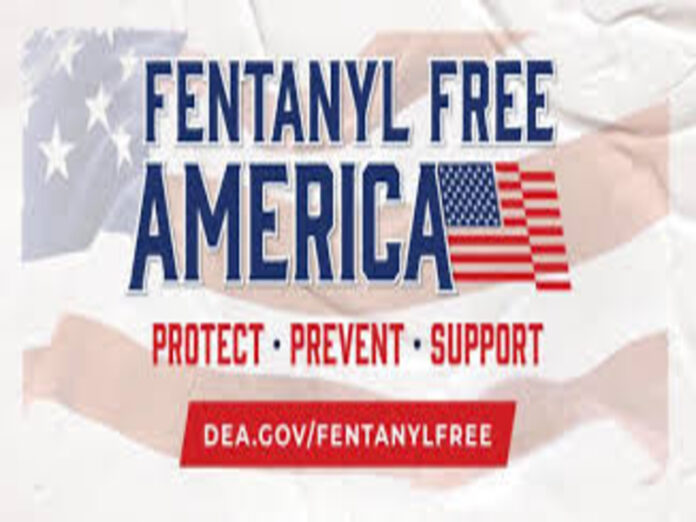
WASHINGTON, DC.- President Donald Trump, joined by Drug Enforcement Administration (DEA) Administrator Terrance Cole, announced a sweeping new federal initiative on Wednesday titled “Fentanyl Free America,” a nationwide strategy combining intensified law-enforcement operations, maritime interdictions, digital-platform oversight, and expanded community outreach.

The announcement follows DEA’s formal launch of the same initiative on Wednesday, described by the agency as a “comprehensive enforcement and public awareness campaign” intended to sharply reduce both the supply and demand for illicit fentanyl, a synthetic opioid responsible for tens of thousands of U.S. deaths each year.
A National Crisis Still Taking Lives;
Federal health data show that approximately 105,000 Americans died from drug overdoses in 2023, with nearly 80,000 linked to opioids. In 2024, provisional CDC numbers show overdose deaths declined to roughly 80,000, the lowest since 2019, yet 54,000 of those deaths remained opioid-related and heavily driven by fentanyl.
President Trump acknowledged progress but emphasized the crisis is ongoing.
“We are making progress, but the job is not finished. This effort uses every lawful tool we have, at the border, at sea, online, and in our communities, to stop this poison before it kills more Americans.”
Inside The “Fentanyl Free America” Plan;
DEA officials describe the initiative as built on four pillars: enforcement, intelligence, education and awareness, and strategic partnerships across federal, state, and international lines.
Key components include:
- Expanded Enforcement: Sweep operations across 23 U.S. field divisions and multiple foreign posts. Recent surges resulted in dozens of arrests and the seizure of fentanyl powder, counterfeit pills, heavy weapons, and methamphetamine.
- Cartel Disruption: Focused targeting on the Sinaloa and Jalisco New Generation (CJNG) cartels, long identified as the primary producers and traffickers of illicit fentanyl entering the United States.
- National Awareness Push: Free educational materials, billboards, and digital toolkits available to schools, faith communities, medical providers, and local governments.
- Data-Driven Targeting: Intelligence from DEA’s 2024 National Drug Threat Assessment guiding regional crackdowns and interdiction actions.
DEA data shows that the agency seized more than 60 million fentanyl-laced pills and nearly 8,000 pounds of fentanyl powder in 2024. As of this week, more than 9,300 pounds of fentanyl have been seized nationwide in 2025, representing an estimated 347 million potentially lethal doses.
Maritime Strikes And International Pressure;
The Trump administration has paired the DEA effort with continued military interdictions against cartel-linked drug-smuggling boats in the Caribbean and eastern Pacific. DEA Administrator Cole said these operations “help stop the flow of illegal drugs into the U.S. before they reach our borders.”
Some human-rights groups have questioned the legality of certain maritime engagements, but the administration maintains that the strikes are lawful responses to organized criminal networks fueling U.S. overdose deaths.
Cartels’ Expanding Use Of Social Media;
A major element of the new initiative centers on the alarming growth of social-media-based drug selling.
DEA reports show traffickers using Snapchat, Instagram, TikTok, Facebook, X, and YouTube to advertise and deliver fentanyl-laced pills and powders, often using emoji codes and disappearing messages to evade detection.
Investigations over the past four years have documented:
- Teen and young-adult access to counterfeit pills through direct messaging apps.
- Entire trafficking networks operating through Snapchat and Instagram.
- Cartel recruiters are using social media to enlist drivers and lookouts.
- A spike in domestic pill-press operations coordinated online.
- Fake “online pharmacies” are shipping fentanyl-laced pills nationwide.
Parents’ groups and law-enforcement agencies nationwide warn that the combination of youth social-media use and fentanyl’s lethality has created a uniquely deadly environment.
Tech Companies Face Growing Federal Scrutiny;
The White House is expected to press major platforms for deeper cooperation, including:
- Tighter, faster reporting of suspected trafficking networks.
- Stronger automated detection tools.
- Clearer pathways for sharing data with law enforcement.
- Consideration of new liability protections for compliant platforms.
Advocates say the steps are overdue; others warn of potential overreach or speech-restriction concerns if new laws are not written carefully.
Legislative Context: HALT Fentanyl Act;
The rollout follows President Trump’s signing of the HALT Fentanyl Act on July 16, 2025, permanently classifying fentanyl-related substances as Schedule I drugs and strengthening penalties for trafficking. Law-enforcement agencies widely supported the legislation, calling it a crucial tool for stopping evolving fentanyl analogs.
Some public-health groups caution that harsher penalties alone will not solve addiction and emphasize continued investment in treatment and recovery services.
Measuring Success;
Administration officials say they will track:
- Further reductions in overdose deaths.
- Lower fentanyl purity levels.
- Increased seizures of fentanyl powder and counterfeit pills.
- Greater cooperation from social-media platforms.
- Disruptions in cartel logistics.
Public-health analysts warn cartels could shift to even more potent synthetic opioids, including nitazenes and carfentanil, if enforcement pressure increases.
Still, families who have lost loved ones say urgent action is needed.
Editor’s Note:
All factual information in this article is sourced from publicly available federal records, DEA statements, CDC overdose statistics, congressional documents, and reputable national reporting. Overdose data may be updated as agencies release revised figures. Jennifer Hodges, Englebrook Independent News.