Second Stabbing In Four Months Exposes Deep Failures In Charlotte’s Immigration, Transit Security, Mental-Health, And Bail Systems
Sunday, December 7, 2025, 10:15 A.M. ET. 6 Minute Read, By Jennifer Hodges, Political Editor, With Art Fletcher, Executive Editor: Englebrook Independent News,
CHARLOTTE, NC.- Charlotte’s LYNX Blue Line light rail system is once again the scene of violent bloodshed, after a man was stabbed in the chest by a twice-deported illegal immigrant, marking the second knife attack aboard the same transit line in under four months and reigniting fierce debate over immigration enforcement, transit security, mental-health failures, and bail policies in Mecklenburg County.

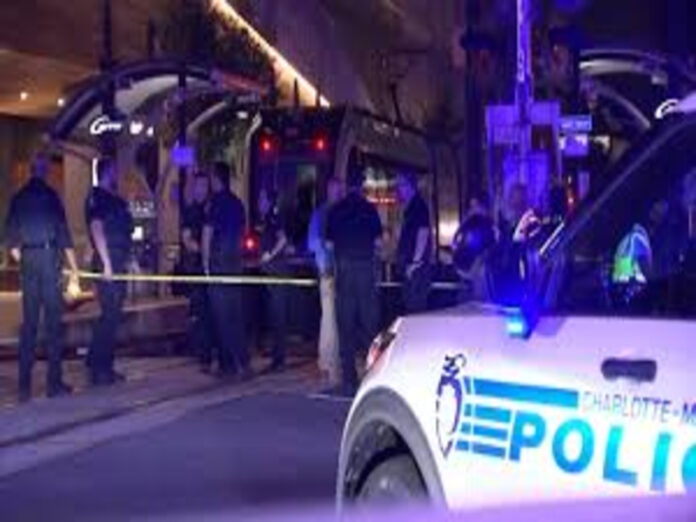
The latest attack occurred Friday night, December 5, 2025, when police say Oscar Gerardo Solorzano-Garcia, 33, a Honduran national in the United States illegally, became intoxicated and disruptive aboard a northbound Blue Line train. According to Charlotte-Mecklenburg Police, Solorzano-Garcia began yelling at passengers before pulling a knife and stabbing a fellow rider in the chest.
The victim, whose name has not yet been released, was rushed by MEDIC to a local hospital and remains in critical but stable condition.
Solorzano-Garcia now faces multiple felony charges, including:
- Attempted first-degree murder.
- Assault with a deadly weapon, inflicting serious injury.
- Carrying a concealed weapon.
- Breaking and entering a motor vehicle.
- Intoxicated and disruptive conduct. Jail records confirm he is being held without bond in the Mecklenburg County Detention Center.
Federal immigration sources confirm Solorzano-Garcia is a Honduran citizen who has been deported from the United States at least twice, first in 2018 and again after a later arrest, before illegally reentering the country. His criminal record reportedly includes robbery, aggravated battery, and the use of false identification, raising new questions about how a repeat offender was again roaming freely in Charlotte.
The stabbing occurred near North Brevard Street and East 22nd Street, where investigators processed the scene and collected evidence as riders watched in shock.
A Murder That Shook The City;
The new attack has reopened deep wounds from August 22, 2025, when 23-year-old Ukrainian refugee Iryna Zarutska was brutally stabbed to death on the same light rail system as she rode home from work.

Surveillance footage shows Decarlos Dejuan Brown Jr., 34, taking a seat behind Zarutska before pulling a folding knife and stabbing her repeatedly, including a fatal wound to the neck. Ms. Zarutska died on the train before first responders could save her.
Brown was immediately arrested and charged under North Carolina law with first-degree murder. In September, federal prosecutors escalated the case, charging him with committing an act that caused death on mass transportation, a crime eligible for the federal death penalty. A grand jury returned an indictment in October.
Ms. Zarutska had fled Ukraine in 2022 after Russia’s invasion, seeking safety and opportunity in the United States. She worked at a local pizzeria, attended English classes at community college, and dreamed of becoming a nurse.
Her death stunned the city and drew national attention.
Mental Illness, Repeat Offenders, And A System That Failed;
Federal court filings reveal Brown had at least 14 prior arrests and had previously served approximately five years in prison for armed robbery.
Body-camera footage captured earlier in 2025 shows Brown suffering from apparent schizophrenia and delusions, telling officers that foreign material had been placed inside his body and was controlling him. His own mother reportedly begged authorities to have him involuntarily committed.
Despite those warnings and despite a later arrest earlier this year, Brown was released without bond, setting the stage for the murder of Zarutska months later.
State lawmakers and prosecutors acknowledge the deeper issue: North Carolina’s mental-health system remains dangerously underfunded and overwhelmed, leaving judges with few options other than jail or release, even for defendants in active crisis.
Federal Investigators Call Murder “Preventable;”
In the aftermath of Ms. Zarutska’s murder, the Federal Transit Administration (FTA) launched a sweeping investigation into Charlotte Area Transit System (CATS), ultimately concluding the killing was “preventable” and the result of systemic failures in leadership and accountability.
Among the findings:
- Inadequate security staffing aboard trains.
- Poor coordination between transit personnel and police.
- Overreliance on cameras instead of visible law enforcement.
- Weak oversight of private security contractors.
Federal transportation officials warned that Charlotte’s failure to secure its transit system could jeopardize future federal funding.
Despite these warnings, another stabbing has now occurred, this time allegedly by a twice-deported illegal immigrant.
Sanctuary Policies Under Renewed Fire;
Solorzano-Garcia’s immigration status has triggered a new wave of political backlash.
Mecklenburg County Sheriff Garry McFadden terminated the county’s 287(g) cooperation agreement with ICE in 2018, ending routine federal immigration enforcement inside the county jail. Since then, local and federal critics have accused the county of operating as a de facto sanctuary jurisdiction.
Republicans argue that Solorzano-Garcia’s case is proof that limited cooperation with ICE allowed a deported criminal alien to walk free repeatedly, until a man nearly lost his life.
In response, North Carolina lawmakers passed House Bill 318 this year, compelling sheriffs to:
- Verify the immigration status of certain arrestees.
- Hold suspected illegal immigrants for up to 48 hours for possible ICE pickup.
Additional legislation moving through Raleigh would allow crime victims to sue sanctuary jurisdictions and mandate broader cooperation with federal immigration authorities.
The Blue Line stabbing now stands at the center of that debate.
“Iryna’s Law” And A City Still Unsafe;
Following Zarutska’s murder, lawmakers enacted “Iryna’s Law”, a package of reforms strengthening pretrial detention for violent offenders and improving coordination between mental-health agencies and the courts.
The law took effect just days before the December stabbing.
For many Charlotte residents, its timing has been haunting.
Two stabbings. Two failed systems. One transit line.
A Community On Edge;
National leaders, including President Donald Trump, have drawn direct links between the two attacks and what they call “soft-on-crime leadership” in Charlotte and Mecklenburg County. The administration has vowed stepped-up federal enforcement, harsher sentencing, and aggressive removal of violent illegal immigrants.
Civil-rights advocates counter that sweeping crackdowns risk harming law-abiding immigrants and ignoring root causes like mental-health breakdowns and transit security failures.
What remains uncontested is this:
- A young refugee who fled war was stabbed to death.
- A Charlotte rider was critically wounded.
- Both attacks happened on the same taxpayer-funded rail system.
- Both suspects had clear warning signs long before violence struck.
Charlotte faces a hard truth and a defining test of whether it will finally close the gaps that allowed these tragedies to happen.
Editor’s Note:
By Jennifer Hodges, Political Editor, & Art Fletcher, Executive Editor
Englebrook Independent News
This report is based solely on publicly available and verifiable information, including Charlotte-Mecklenburg Police charging documents, Mecklenburg County jail records, federal court filings, and U.S. Department of Justice releases related to both the December 5, 2025, Blue Line stabbing and the August 22, 2025, murder of Iryna Zarutska. Additional reporting and verification were conducted using coverage from the Associated Press, ABC News, WCNC, WBTV, People magazine, and federal transportation agencies investigating safety failures within the Charlotte Area Transit System.
All defendants are presumed innocent unless and until proven guilty in a court of law.