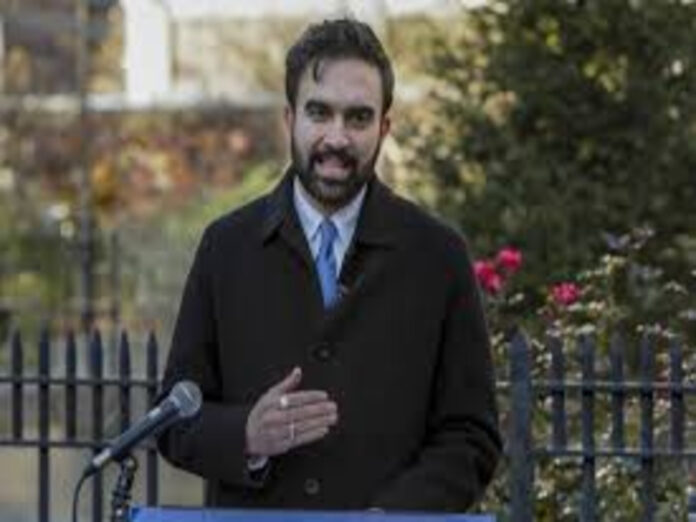
Mayor-Elect Zohran Mamdani’s Pledge To End Homeless-Camp “Sweeps” Could Invite Chaos, & History Warns That Relocation “Solutions” Such As The SOTA Program, Under Bill de Blasio, Did More Harm Than Good
Sunday, December 7, 2025, 1:00 P.M. ET. 4 Minute Read, Op-Ed, By Jennifer Hodges, Political Editor: Englebrook Independent News,
MANHATTAN, NY.- As New York City stands on the brink of a dramatic policy shift, Mayor-elect Zohran Mamdani’s vow to end the clearing of homeless encampments, the so-called “sweeps,” represents a sharp departure from the approach of outgoing Mayor Eric Adams and signals a high-risk gamble with deeply uncertain consequences.

Mamdani has defended the move as humane, arguing that dismantling camps and seizing personal belongings merely displaces vulnerable individuals without addressing the root causes of homelessness. Instead, his administration says it will focus on securing permanent housing solutions rather than forcing people from one block to the next.
That argument resonates emotionally. But policy must be judged not by intention, only by outcome. And history suggests that halting enforcement without fully built infrastructure invites unintended and often severe consequences.
A Policy That Could Draw Homelessness From Across America;
Ending sweeps without a fully developed, funded, and operational housing and treatment system risks transforming New York City into a national magnet for homelessness. Word travels fast. If the city becomes known as a place where encampments are no longer removed, individuals struggling with housing instability from around the country may arrive seeking refuge.
The result could be widespread expansion of tent communities across parks, sidewalks, transit corridors, and residential neighborhoods, stressing sanitation systems, emergency services, hospitals, and law enforcement alike.
Public-safety officials have already warned that entrenched encampments frequently become hubs for open-air narcotics activity, mental-health emergencies, and violent crime. Overdoses, human trafficking, and predatory behavior often follow. Once these conditions become normalized, restoring order becomes exponentially harder.
Good intentions do not insulate a city from harm.
The SOTA Program: A Cautionary Tale From The de Blasio Years;
Mamdani’s proposal bears philosophical resemblance to the “housing-first” framework embraced under former Mayor Bill de Blasio, most notably through the Special One-Time Assistance (SOTA) program launched in 2017.
SOTA offered homeless families one year of prepaid rent to move out of New York City shelters, often to locations outside the five boroughs. Thousands were sent primarily to New Jersey cities like Newark, East Orange, Paterson, and Jersey City.
At face value, SOTA appeared to be a solution. In practice, it became a pipeline of misery.
Investigations later revealed that many relocated families were placed into unsafe, substandard housing, properties plagued by mold, rodent infestations, broken furnaces, illegal wiring, leaking roofs, and hazardous living conditions. Unscrupulous landlords collected a full year’s rent upfront, then neglected maintenance entirely.
When the one-year SOTA voucher expired, many families were once again homeless, now abandoned on the streets of New Jersey, far from their original support networks, medical providers, employment prospects, and schools.
The SOTA program did not solve homelessness. It exported it.
Why Ending Sweeps Without Infrastructure Is Dangerous;
Mayor-elect Mamdani’s proposal stops enforcement without yet demonstrating the capacity to absorb thousands, potentially tens of thousands, of individuals into real, permanent, regulated housing.
Shelters are already strained. Supportive housing supply is limited. Mental-health and addiction-treatment infrastructure remains insufficient. Construction timelines for permanent affordable housing stretch across multiple years.
Policy cannot move faster than capacity.
Without immediate scalable alternatives, the city risks replacing one humanitarian crisis with another, more visible, more chaotic, and far more challenging to reverse.
What a Serious Plan Would Require;
If the new administration truly intends to address homelessness, rather than merely halt enforcement, the following must come first:
- A massive, publicly financed affordable-housing construction initiative.
- Expanded supportive housing integrated with mental-health and addiction care.
- Strict landlord oversight to prevent exploitation.
- Large-scale shelter expansion that prioritizes safety and dignity.
- Employment, education, and job-training programs are tied directly to housing placement.
- Transparent metrics and public reporting of outcomes.
Without this, ending sweeps will not be innovative. It will be abdication.
Compassion Cannot Be Measured By Slogans;
New York has already lived through the consequences of a well-intentioned but poorly executed homelessness policy. The humanitarian rhetoric of the SOTA years masked real suffering and left entire families worse off than before.
If Mayor-elect Zohran Mamdani moves forward without a comprehensive, funded, enforceable plan, with real housing ready before enforcement ends, New York City risks witnessing the most severe expansion of street homelessness in its modern history.
Compassion is not what leaders promise.
Compassion is what their policies actually produce.
Editor’s Note:
This Op-Ed was written by Jennifer Hodges, Political Editor for Englebrook Independent News. Reporting and analysis are based on publicly available statements from Mayor-elect Zohran Mamdani regarding the cessation of homeless encampment sweeps, as well as independent investigative reporting and government findings concerning the Special One-Time Assistance (SOTA) relocation program implemented under former Mayor Bill de Blasio, including evidence of substandard housing conditions and post-voucher displacement affecting relocated families in New Jersey.