U.S. Africa Command Confirms Operation In Sokoto State As Abuja Emphasizes Joint Counterterror Planning, Not Religious War
Friday, December 26, 2025, 6:45 A.M. ET. 3 Minute Read, By Jennifer Hodges, Political Editor: Englebrook Independent News,
WASHINGTON, DC.- President Donald Trump said the United States carried out Christmas Day airstrikes against Islamic State (ISIS) targets in northwest Nigeria, framing the operation as a direct response to what he described as years of persecution and killings of Christians in the country.
Multiple major outlets reported that the United States Africa Command (AFRICOM) confirmed the strikes occurred in Nigeria’s Sokoto State and said the operation was conducted “in coordination with Nigerian authorities,” with an initial assessment that multiple ISIS militants were killed at camp locations.

Nigeria’s government publicly acknowledged security cooperation with the United States around the strike, while also pushing back on Trump’s religious framing of the conflict, emphasizing that extremist violence in Nigeria has affected both Christians and Muslims and is part of a broader, multi-front security crisis.
What Trump Ordered, And What The U.S. Military Confirmed;
In a Christmas night post on Truth Social, Trump announced the strikes and claimed they targeted ISIS elements he said were “targeting and viciously killing, primarily, innocent Christians.”
According to reporting that cited AFRICOM’s statement, the strikes hit ISIS-linked positions in Sokoto State, in Nigeria’s northwest near the Niger border. AFRICOM’s release described the mission as coordinated with Nigerian authorities and reported multiple ISIS militants killed in the targeted camps, though detailed battle-damage assessments and any collateral-damage findings were not immediately provided in the initial public readouts.
Nigeria’s Position: Security Cooperation, Not A “Religious” Campaign;
Nigerian officials, while acknowledging collaboration, sought to avoid describing the strikes as a religiously motivated U.S. intervention. Reporting on official Nigerian statements and diplomatic comments indicated Abuja viewed the action as part of ongoing counterterror coordination, driven by intelligence and operational planning, and not centered on protecting one faith community over another.
This distinction matters in Nigeria, where violence is widely understood by regional analysts as a mix of insurgency, banditry, and extremist militancy that varies by region and often intersects with local disputes, politics, and criminal networks. Several reports underscored that Nigeria’s crisis landscape includes multiple armed actors, including Islamic State-linked factions and Boko Haram, and that civilian victims include both Christians and Muslims.
The Target Set: ISIS-Linked Militants In The Northwest;
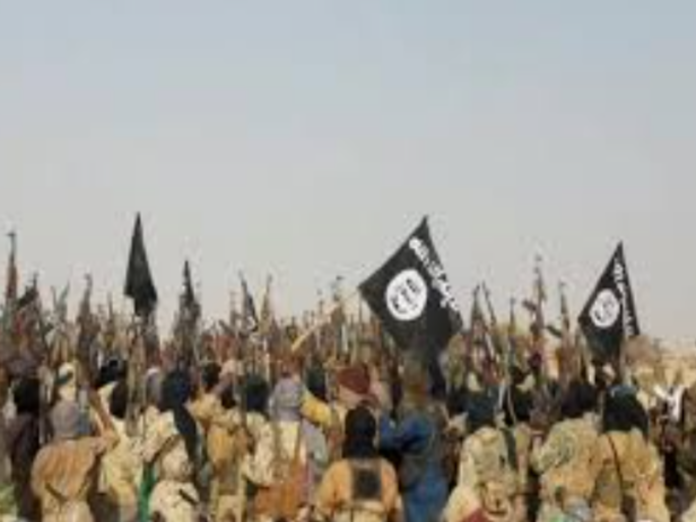
U.S. and international reporting described the strike as aimed at ISIS-associated militants operating in Nigeria’s northwest, an area that has seen expanding militant and criminal activity in recent years, distinct from the long-running Boko Haram conflict concentrated in the northeast.
While Trump characterized the operation as retaliatory and preventative, warning that the United States would not allow ISIS to continue attacks, Nigeria’s government messaging focused on counterterrorism collaboration and the need to maintain national cohesion in a religiously diverse country.
What Remains Unclear;
As of early Friday, official public statements did not provide full operational details such as the specific platforms used, exact target coordinates, the precise number of militants killed, or any independent accounting of civilian harm. AFRICOM indicated an initial assessment of militant casualties, while fuller after-action reviews typically develop over time.
Separately, news coverage noted debate among observers over whether the strikes represent a limited counterterror action within an existing U.S.–Nigeria security relationship or a broader shift toward more direct American kinetic involvement in West Africa under Trump’s renewed emphasis on religious-persecution narratives.
Editor’s Note:
This report is based on contemporaneous coverage and official statements attributed to U.S. Africa Command and Nigerian government representatives as reported by major wire services and national outlets. Englebrook Independent News will update this story as AFRICOM releases additional strike details, casualty assessments, or findings related to collateral damage, and as Nigerian authorities provide further clarification on the scope and terms of bilateral coordination, by Jennifer Hodges, Political Editor.