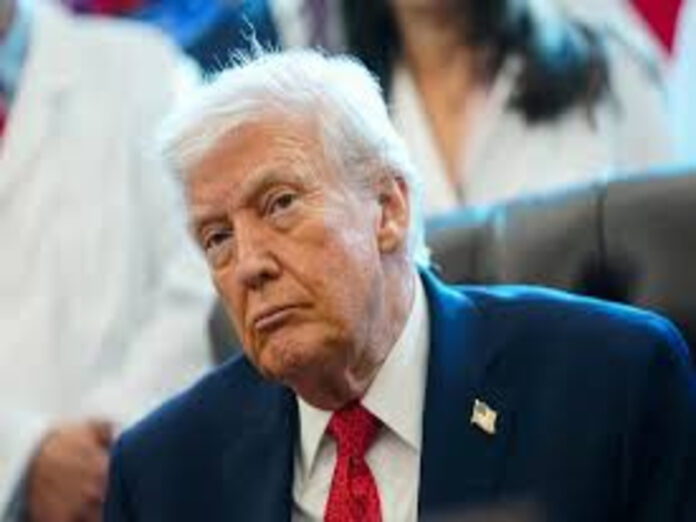
President Announces Pause Of Planned Tariff Increases On Furniture, Kitchen Cabinets, & Vanities For One Year To Support Trade Talks & Ease Pricing Pressures
Saturday, January 3, 2026, 9:45 A.M. ET. 4 Minute Read, By Haylee Ficuciello, Economy & Finance Editor: Englebrook Independent News,
WASHINGTON, DC.- On New Year’s Eve, Wednesday, December 31, 2025, Donald J. Trump signed a presidential proclamation officially delaying the planned increase in tariffs on certain imported goods, including upholstered furniture, kitchen cabinets, and vanities, by one year, postponing the implementation from January 1, 2026, to January 1, 2027.

The announcement, made late Wednesday evening from Mar-a-Lago, in Palm Beach, Florida, was framed by the administration as a strategic move designed to allow additional time for trade negotiations with key foreign partners while easing near-term pricing pressures facing American consumers.
Under the proclamation, tariff rates on the affected goods will remain at the current 25 percent level, rather than increasing as originally scheduled at the start of 2026.
Proposed Tariff Increases Now On Hold;
The tariff delay pauses increases that were formally outlined in a September 2025 trade proclamation. The scheduled increases, now deferred until at least January 1, 2027, included:
- Upholstered furniture, including sofas, chairs, and other padded household furnishings, which were set to rise from 25 percent to 30 percent
- Kitchen cabinets and bathroom vanities, which were scheduled to increase sharply from 25 percent to 50 percent
With the one-year pause now in effect, all three product categories will continue to be subject to the existing 25 percent tariff rate through 2026 unless further executive action or negotiated agreements alter the policy.
White House Rationale: Trade Talks And Consumer Relief;
According to the White House fact sheet accompanying the proclamation, the delay reflects ongoing negotiations with trade partners over timber, lumber, and derivative wood products.
Administration officials emphasized that the move does not represent a reversal of tariff policy, but rather a calculated pause intended to give negotiators more time to reach agreements addressing trade imbalances and national economic interests without imposing immediate cost increases on American households.
The White House stated that the United States continues to pursue “productive negotiations” aimed at achieving fair and reciprocal trade outcomes, particularly in sectors tied to housing, construction, and consumer goods.
President Trump’s Remarks;
In comments released alongside the proclamation, President Trump underscored the administration’s dual focus on protecting American manufacturing while limiting the financial burden on families and businesses.
“We believe in fair trade, and we will always fight for America’s workers and manufacturers,” the President said. “At the same time, we want to avoid unnecessary burdens on American families and businesses.”
Administration officials reiterated that the delayed tariffs remain available as a policy tool should negotiations stall or fail to produce acceptable outcomes.
Market And Industry Reaction;
The announcement was met with a positive reaction from financial markets, particularly among major furniture and home-goods retailers. Shares of several publicly traded furniture companies rose following the news, reflecting investor expectations that the pause could stabilize pricing and demand in a sector already sensitive to inflation and interest-rate pressures.
Industry analysts noted that retailers and suppliers had been preparing for price increases tied to the higher tariff schedule, which could have translated quickly into higher costs for consumers purchasing furniture and cabinetry.
Impact On Consumers And The Broader Economy;
Furniture, cabinets, and vanities represent significant household expenditures, particularly for families undertaking home renovations or purchasing new homes. Analysts have warned that higher tariffs on these products could have compounded affordability challenges already facing consumers.
With inflationary pressures still present in late 2025, the tariff pause is expected to provide short-term price stability, though economists caution that costs could rise again in 2027 if negotiations fail to yield long-term solutions.
Broader Trade Policy Context;
The tariff delay is part of a broader pattern of trade policy adjustments throughout 2025, as the administration balanced aggressive tariff enforcement with targeted delays and exemptions. Several of these moves have drawn attention from both domestic industries and international trading partners, underscoring the evolving nature of U.S. trade policy as it enters 2026.
Editor’s Note:
This article has been verified using official White House proclamations and corroborated reporting from multiple national news organizations. Tariff rates, timelines, and policy details reflect publicly released government documentation as of December 31, 2025. Trade negotiations and tariff policy remain subject to change. Verified by Haylee Ficuciello, Economy & Finance Editor, Englebrook Independent News.