What We Know So Far As Federal And State Investigators Examine Use-Of-Force, Vehicle-As-Weapon Standards
Thursday, January 8, 2026, 7:30 A.M. ET. 5 Minute Read, By Jennifer Hodges, Political Editor, & Art Fletcher, Executive Editor: Englebrook Independent News,
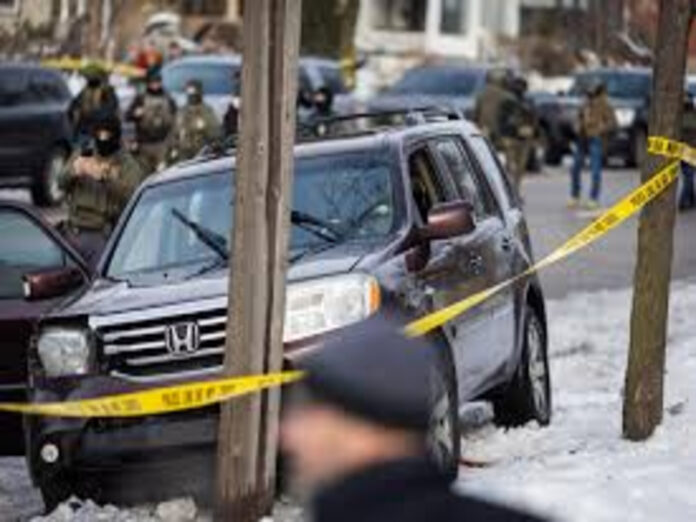
MINNEAPOLIS, MN.- Federal and state investigators continue to examine the fatal shooting of a Minneapolis woman by a United States Immigration and Customs Enforcement (ICE) agent during a federal enforcement operation Wednesday morning, as protests spread across the city and political leaders urge calm amid heightened tensions.

The shooting occurred just shortly after 9:30 a.m. Wednesday, January 7, 2026, in a residential area near Portland Avenue between East 33rd and 34th Streets in south Minneapolis.
The woman killed was identified as Renee Nicole Good, 37, a U.S. citizen. Federal officials confirmed that Good was not the target of the immigration enforcement operation underway at the time.
What We Know So Far;
- ICE agents were concluding an enforcement action and preparing to leave the area when an encounter occurred involving Good’s vehicle.
- According to the Department of Homeland Security (DHS), Good attempted to impede agents as they were departing and struck an ICE agent with her vehicle.
- DHS stated that an ICE agent discharged his firearm after determining the vehicle posed an imminent threat to officers on scene.
- Good was transported to a local hospital, where she was pronounced dead.
- The ICE agent involved was briefly hospitalized after being struck by the vehicle and has since been released.
- The Federal Bureau of Investigation (FBI) and Minnesota law enforcement authorities, including the Minnesota Bureau of Criminal Apprehension, are jointly investigating the incident.
No criminal charges or disciplinary actions have been announced as of Thursday morning.
Federal Response: DHS Defends Agent’s Actions;
Homeland Security Secretary Kristi Noem said Wednesday that the ICE agent acted in accordance with federal law and agency use-of-force policy.
Secretary Noem emphasized that vehicles are legally recognized as deadly weapons when used against law enforcement officers, stating that the agent reasonably believed his life and the lives of fellow agents were in immediate danger.
“This incident will be thoroughly reviewed,” Noem said, adding that DHS will cooperate fully with all investigations while protecting the due-process rights of the officer involved.
State And City Leaders Call For Calm, Amid Past Rhetoric;
Minnesota Governor Tim Walz placed the Minnesota National Guard on a warning order, directing units to be prepared for rapid deployment should unrest escalate. Walz called on residents to remain calm and allow investigators to complete their work before reaching conclusions.
Minneapolis Mayor Jacob Frey echoed those remarks, urging peaceful demonstrations and restraint while facts are reviewed.
However, both leaders now face scrutiny over past public statements made over the last year, in which they sharply criticized ICE and federal immigration enforcement operations. Critics argue that sustained political rhetoric vilifying ICE may have contributed to heightened tensions surrounding Wednesday’s incident.
Federal officials and some community members stress that leadership at all levels must now emphasize de-escalation, allowing investigators to determine the facts without political pressure.
Protests Spread Across Minneapolis;
Despite calls for calm, protests erupted across Minneapolis Wednesday night, with demonstrators gathering near the shooting site and throughout the city. While many protests remained peaceful, law enforcement reported sporadic confrontations, traffic disruptions, and heightened security concerns.
State officials reiterated that the National Guard’s standby status is precautionary and designed to ensure public safety should conditions deteriorate.
Authorities urged residents to remain calm, warning that violence or interference with law enforcement could further complicate an already volatile investigation.
Legal Analysis: Vehicle-As-Weapon Use-Of-Force Standards;
Under federal law and longstanding Supreme Court precedent, law enforcement officers may use deadly force when they have an objectively reasonable belief that they or others face an imminent threat of death or serious bodily harm.
Courts have consistently held that a moving vehicle may constitute a deadly weapon when used in close proximity to officers. Federal appellate rulings have upheld officer-involved shootings in cases where suspects used vehicles to strike, attempt to strike, or trap officers, recognizing that a vehicle’s mass and momentum can cause lethal harm within seconds.
DHS and ICE use-of-force policies permit deadly force when:
- An officer reasonably believes a subject is using a vehicle as a weapon, and
- No reasonable alternative exists to neutralize the threat in time.
Legal scrutiny in this case will focus on several key questions:
Distance and trajectory: How close was the vehicle to the agent at the moment shots were fired?
Intent: Did Good’s actions demonstrate intent to strike or endanger officers?
Timing: Did the perceived threat exist at the exact moment deadly force was used?
Alternatives: Were less-lethal options realistically available under the circumstances?
Investigators will analyze video evidence frame-by-frame to determine whether the agent’s perception of imminent danger aligns with legal standards governing deadly force.
Importantly, legal experts stress that hindsight cannot be used to judge split-second decisions, and that courts evaluate such cases from the perspective of a reasonable officer on the scene.
Investigations Continue;
The FBI and Minnesota authorities are reviewing:
- Body-camera and dash-camera footage
- Bystander and surveillance video
- Physical evidence from the scene
- Medical and forensic findings
Officials say reconstructing the precise sequence of events, including vehicle movement, officer positioning, and the timing of shots, will be critical in determining whether the use of deadly force was legally justified.
Authorities have urged political leaders and the public alike to avoid premature conclusions.
A City Awaits Answers;
The shooting has reignited national debate over immigration enforcement, political rhetoric, and law enforcement use-of-force standards. As emotions remain high, investigators emphasize that only a complete and impartial review will provide clarity.
For now, Minneapolis remains on edge, awaiting answers, accountability, and leadership capable of restoring calm rather than inflaming division.
Editor’s Note:
This article reflects verified information available as of Thursday, January 8, 2026. Details may evolve as federal and state investigations continue. Englebrook Independent News remains committed to fact-based, balanced reporting and will update this story as new, confirmed information becomes available.