Caracas Signals A “Peace Gesture” As Detainees Are Freed Amid U.S. De-Escalation Following Maduro’s Fall
Friday, January 9, 2026, 9:00 A.M. ET. 4 Minute Read, By Jennifer Hodges, Political Editor: Englebrook Independent News,
WASHINGTON, DC.- Venezuela’s post-Maduro interim authorities began releasing political opposition prisoners Thursday in what officials described as a “peaceful gesture” toward national reconciliation, following President Donald Trump’s decision to cancel a second wave of planned U.S. military strikes against the country.
The releases come just days after the dramatic collapse of the Maduro regime and the detention of Nicolás Maduro, marking the first visible policy shift by Venezuela’s new governing structure as it seeks to stabilize the country and prevent further U.S. military action.

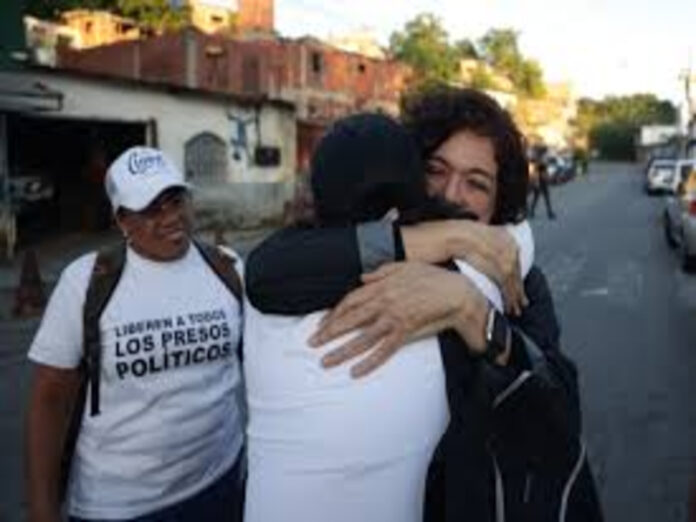
Outside prisons in Caracas, Valencia, and Maracaibo, families gathered in large numbers Thursday as rumors of prisoner lists spread rapidly on social media. Loved ones of detainees waited anxiously for hours, hoping their names would be called, a powerful symbol of how deeply political imprisonment had penetrated Venezuelan society after years of authoritarian rule.
Venezuelan officials said the releases were intended to demonstrate goodwill toward the international community and help reduce political tensions after the unprecedented U.S. strike campaign late last week. While authorities did not release a comprehensive list of freed detainees, international human-rights monitors and foreign governments confirmed that several high-profile opposition figures were among those released.
Those freed include longtime opposition leader Enrique Márquez, activist Biagio Pilieri, and Rocío San Miguel, a prominent Venezuelan-Spanish human-rights lawyer whose detention had drawn global condemnation. The Spanish government also confirmed that five Spanish nationals were released from Venezuelan custody as part of the process.
Human-rights organizations, including Foro Penal and Justicia, Encuentro y Perdón, cautioned that while the releases were real, the full scope remains unclear. Venezuela’s political prisoner population is believed to number in the hundreds, and possibly more than a thousand, after years of arrests tied to protests, election disputes, and opposition organizing.
Trump Halts Second Strike Wave;
The releases coincided with President Trump’s announcement Friday that he had called off a planned second wave of U.S. military strikes against Venezuela, citing what he described as “positive movement” by Venezuelan authorities.
Post on Truth Social, from Washington, Trump said Venezuela’s new leadership had begun cooperating with the United States, specifically referencing the freeing of political prisoners as evidence that pressure was working.
“We were ready to go again,” Trump said. “But when we saw them start releasing prisoners and taking steps toward peace, I made the decision to hold back. We’ll see what they do next.”
Trump confirmed that U.S. military forces remain positioned in the region, emphasizing that the pause in strikes was conditional and could be reversed if Venezuela fails to continue reforms.
The president also indicated that broader discussions were beginning over Venezuela’s energy sector, including the possibility of American involvement in rebuilding the country’s oil and gas infrastructure, a move that would represent a dramatic shift from the sanctions-driven isolation that dominated U.S.–Venezuelan relations for more than a decade.
A Fragile Opening;
Despite the dramatic optics, observers warn that Venezuela has used prisoner releases before as a tactical response to international pressure. In past crises, small batches of detainees were freed while others remained imprisoned or were later rearrested.
Human-rights groups are now calling for:
- Transparent, publicly released lists of freed prisoners
- Medical evaluations of detainees who allege abuse
- Full dismissal of politically motivated charges
- An end to secret detentions and intelligence-service prisons
Until those benchmarks are met, advocates say it will be impossible to know whether this moment marks true political change, or merely a pause in repression.
For Venezuelan families, however, the stakes are immediate. Each name read at a prison gate means a reunion. Each name missing means another night waiting.
Editor’s Note:
This report is based on verified international reporting and government statements from January 8–9, 2026. While multiple high-profile political prisoners and foreign nationals have been confirmed released, independent human-rights organizations caution that the total number of detainees freed has not yet been fully verified. Englebrook Independent News will continue to monitor developments and publish confirmed updates as additional names and documentation become available.