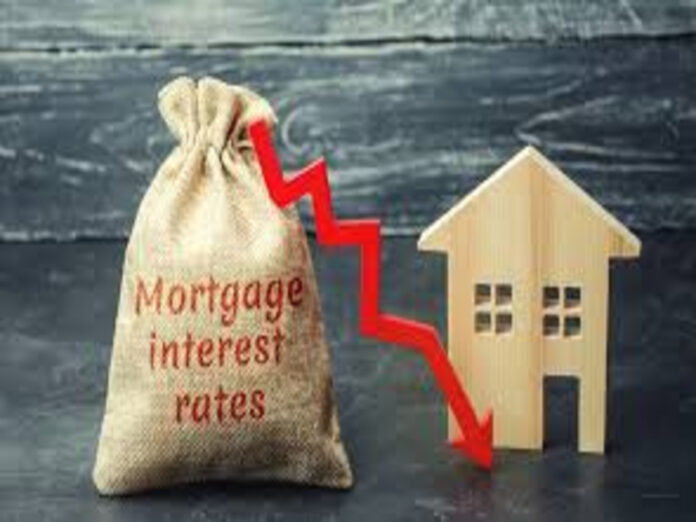
Mortgage Costs Slip Below 6%, Offering Some Financial Breathing Room For Americans
Sunday, January 11, 2026, 4:45 P.M. ET. 3 Minute Read, By Haylee Ficuciello, Economy & Finance Editor: Englebrook Independent News,
WASHINGTON, DC.- In a notable shift in U.S. financial markets, interest rates, particularly those tied to mortgage borrowing, have fallen to their lowest levels in roughly three years, offering measurable relief to prospective homebuyers and broader economic actors still feeling the effects of elevated borrowing costs.
Recent data show the average U.S. 30-year fixed mortgage rate dipping below 6%, specifically to 5.99%, for the first time since early 2023, according to Mortgage News Daily and market reporting. This development followed announcements from the White House about preliminary steps toward purchasing mortgage-backed securities, aimed at increasing liquidity and reducing overall housing finance costs.

At the same time, Freddie Mac’s weekly survey of mortgage products reports average long-term mortgage rates near their lowest point in over a year, holding around 6.15% to 6.16%, reflecting sustained downward pressure from Federal Reserve policy and improved market expectations. These figures stand well below the nearly 7% rates seen during the prior rate-tightening cycle.
Impact For Homebuyers;
Falling mortgage rates directly affect monthly housing costs. For many would-be first-time buyers, even small reductions in long-term borrowing costs can translate into hundreds of dollars in savings per month over the life of a loan.
Housing economists note that while affordability challenges remain due to elevated home prices, lower mortgage rates are helping stabilize buyer demand and easing pressure on household budgets.
According to housing market analysts, median monthly mortgage payments have reached their lowest level in two years, driven largely by declining interest rates, even as home sales remain cautious due to limited housing inventory.
Economic Context And Policy Actions;
The recent easing in interest rates follows a series of actions by the Federal Reserve in late 2025, when the central bank enacted multiple interest-rate cuts in response to slowing job growth and cooling inflation. These moves lowered the federal funds rate and rippled through consumer lending markets, including mortgages, auto loans, and credit products.
Labor market data helped accelerate the shift. In December 2025, the U.S. economy added just 50,000 jobs, the smallest monthly gain since the pandemic era, a clear signal that economic momentum was slowing. However, as inflation pressures ease, this may signal a steady, balanced economy.
These conditions encouraged policymakers to prioritize financial stability and economic expansion over inflation containment.
Administration Perspective;
The Trump administration has pointed to declining interest rates as evidence that its economic strategy is restoring financial stability and affordability.
In addition to signaling support for the mortgage-backed securities market, President Trump has proposed a one-year cap of 10% on credit-card interest rates, a move aimed at shielding consumers from excessive borrowing costs while longer-term reforms are debated in Congress.
Administration officials argue that lower interest rates combined with regulatory reforms are helping American households regain financial footing after years of inflation-driven strain.
Outlook For Borrowers;
While economists do not expect a return to the historically low mortgage rates of the pandemic era, when 30-year loans fell below 3%, forecasts for 2026 suggest continued stability in the 5.9% to 6.3% range.
That level, analysts say, could create sustainable opportunities for credit-qualified first-time buyers and homeowners looking to refinance, while supporting broader economic growth.
For millions of Americans who had been sidelined by high borrowing costs, the recent decline in rates represents a meaningful, if gradual, shift toward financial relief.
Editor’s Note:
This report was compiled, written by, and verified by Haylee Ficuciello, Economy & Finance Editor, for Englebrook Independent News, using mortgage-rate surveys, Federal Reserve data, and federal economic policy statements. All figures and policy references were reviewed in accordance with Englebrook Independent News’ editorial standards for accuracy, sourcing, and independence.