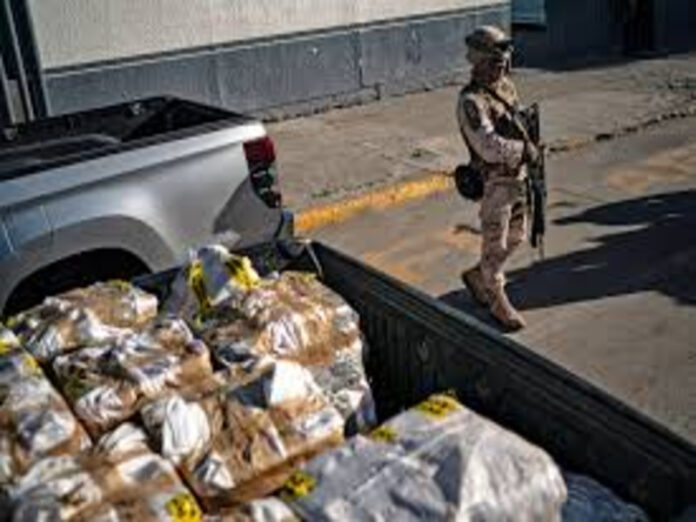
U.S. Intelligence Personnel To Assist Mexican Forces In Expanded Crackdown On Drug Cartels
Saturday, January 17, 2026, 7:30 A.M. ET. 4 Minute Read, By Jennifer Hodges, Political Editor & Art Fletcher, Executive Editor: Englebrook Independent News,
WASHINGTON, DC.- The U.S. Department of Justice has confirmed that Central Intelligence Agency (CIA) personnel will assist Mexican military forces in future operations targeting powerful drug cartels operating inside Mexico, according to senior Justice Department officials and multiple verified reports.
The cooperation would involve CIA agents accompanying Mexican troops during cartel crackdowns, providing intelligence support, strategic guidance, and real-time targeting assistance, while Mexican authorities maintain full operational command. U.S. officials emphasized that the initiative does not involve American combat forces and is designed to respect Mexican sovereignty.

The expanded collaboration represents a significant escalation in bilateral counter-narcotics efforts as both nations confront the growing threat posed by fentanyl trafficking, cartel violence, and transnational criminal networks destabilizing large regions of Mexico and contributing to record overdose deaths in the United States.
Scope Of CIA Involvement;
According to Justice Department sources, CIA personnel would operate in a support and advisory capacity only, embedded alongside Mexican military units conducting raids on suspected cartel targets, including clandestine fentanyl laboratories, trafficking hubs, and command infrastructure.
Mexican forces would remain in full control of tactical decisions and execution. U.S. involvement would be limited to intelligence collection, analysis, and operational coordination.
Senior U.S. officials described the arrangement as joint, authorized cooperation, undertaken with the consent of the Mexican government and intended to enhance effectiveness while maintaining diplomatic and legal boundaries.
Background Of The Proposal;
The proposal follows months of heightened diplomatic engagement between Washington and Mexico City as cartel-driven fentanyl production continues to devastate American communities. U.S. officials have increasingly expressed frustration with the scale and sophistication of cartel operations and have urged deeper cooperation to disrupt supply chains at their source.
According to reporting by major U.S. outlets, American officials have pressed Mexico to allow U.S. intelligence officers, and, in some proposals, limited numbers of special operations advisers, to work more closely with Mexican forces during active enforcement operations.
Justice Department officials reiterated that Mexican sovereignty remains central to the plan, noting that all actions would require Mexican authorization and oversight.
Mexican Government Response;
Mexico’s political leadership has responded cautiously. President Claudia Sheinbaum has publicly reaffirmed her administration’s opposition to foreign military intervention on Mexican soil, emphasizing that Mexico alone must command its internal security operations.
Mexican officials have expressed willingness to expand intelligence sharing, data analysis, and coordination from joint command centers, but have resisted broader foreign participation during on-the-ground operations.
Despite public resistance, diplomatic negotiations continue behind closed doors, with both governments acknowledging a shared interest in dismantling cartel networks while avoiding actions that could inflame political tensions or public opposition.
Historical Context Of Cooperation;
U.S. intelligence involvement in Mexico is not unprecedented. Over the past two decades, U.S. agencies, including the CIA, DEA, FBI, and Department of Homeland Security, have worked with vetted Mexican military and naval units to identify, track, and dismantle cartel leadership.
These efforts have included intelligence sharing, training, equipment support, and financial investigations, often conducted discreetly due to the sensitive nature of bilateral security cooperation.
Investigative reporting has previously revealed CIA assistance in tracking high-value cartel targets, underscoring the longstanding, though often classified, partnership between the two countries.
Legal And Diplomatic Implications;
Embedding CIA officers alongside foreign troops raises complex legal and diplomatic considerations. Critics warn such arrangements could blur jurisdictional lines and provoke backlash if perceived as U.S. intervention.
Supporters argue that cartels operate as transnational criminal enterprises and that enhanced intelligence cooperation is essential to combating the fentanyl epidemic, human trafficking, and cross-border violence affecting both nations.
At present, no formal public agreement has been released outlining the parameters of CIA involvement. Any operational framework would likely remain classified for security reasons.
What Comes Next;
U.S.-Mexico negotiations on expanded security cooperation are ongoing. Both governments have reiterated their commitment to dismantling cartel operations while balancing sovereignty, public perception, and legal constraints.
Whether a final agreement permitting CIA agents to accompany Mexican troops will be formalized remains uncertain. What is clear is that pressure is mounting on both sides of the border to address cartel violence with greater urgency and coordination.
Editor’s Note:
This report is based on verified reporting from multiple reputable news organizations and confirmed statements from U.S. Department of Justice sources. All facts have been cross-checked against publicly available information as of January 16, 2026. Ongoing diplomatic discussions referenced in this article reflect the most current information available at the time of publication.