White House Ties Tariff Relief To Energy Shift; Trump Cites 25% To 18% Reduction & Major New Indian Purchase Commitments
Monday, February 2, 2026, 1:15 P.M. ET. 4 Minute Read, By Haylee Ficuciello, Economy & Finance Editor: Englebrook Independent News,
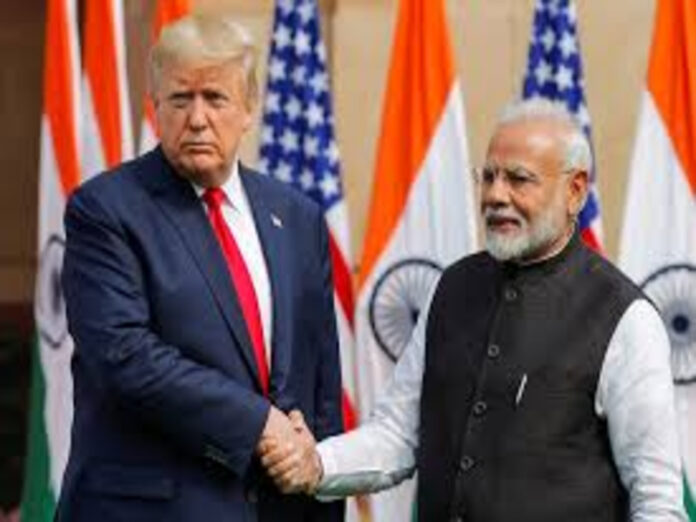
WASHINGTON, DC.- President Donald Trump announced Monday that the United States and India have reached a new trade agreement that will reduce U.S. tariffs on Indian goods, following India’s commitment to halt purchases of Russian oil and significantly increase imports of American energy.

The announcement came after a phone call between Trump and Indian Prime Minister Narendra Modi. According to Trump, the agreement will lower U.S. “reciprocal” tariffs on Indian imports from 25 percent to 18 percent, effective immediately.
As of Monday, the Indian government had not released a formal joint statement outlining the full scope of the agreement, and Modi had not publicly confirmed every term described by Trump. Additional documentation is expected in the coming days.
What Trump Says Is In The Agreement;
Based on public statements made by the president and reporting from multiple international outlets, the agreement includes several major components:
- Lower U.S. tariffs on Indian goods: The United States will reduce its reciprocal tariff rate from 25 percent to 18 percent, easing costs on a wide range of Indian imports entering the U.S. market.
- India to halt purchases of Russian oil: Trump said Modi agreed that India will stop buying Russian crude oil, a major shift given India’s status as one of the world’s largest oil importers.
- Expanded energy imports from the United States: India will increase purchases of American energy products, including crude oil and natural gas. Trump also suggested Venezuela could become an additional supplier under U.S.-controlled arrangements.
- Large-scale Indian purchase commitments: Trump stated that India committed to buying more than $500 billion worth of American goods, including energy, technology, agricultural products, and manufactured items.
- Indian market-access concessions: According to Trump, India will move to reduce tariffs and non-tariff barriers on U.S. goods, though specific product lists and enforcement mechanisms have not yet been released.
Context: Tariffs, Energy Leverage, And Pressure On Russian Oil;
The agreement comes amid continued U.S. efforts to curtail global demand for Russian energy exports. Since Russia’s 2022 invasion of Ukraine, India sharply increased its purchases of discounted Russian crude, becoming one of Moscow’s largest remaining energy customers.
Trump has repeatedly argued that tariff policy can be used as leverage to reshape global energy flows and weaken Russia’s revenue base. In social media posts and public remarks, Trump framed the agreement as both an economic deal and a geopolitical strategy aimed at tightening financial pressure on Moscow.
Market And Economic Implications;
A tariff reduction from 25 percent to 18 percent is expected to lower costs for U.S. importers sourcing goods from India and could reduce consumer price pressures, depending on how much of the tariff burden has been passed through supply chains.
On the energy front, India’s pledge to stop buying Russian oil, if fully implemented, would significantly alter global crude flows. Russian barrels displaced from India would need to find new buyers, while U.S. producers could see expanded access to one of the world’s fastest-growing energy markets.
Analysts note that such a shift would also affect shipping routes, refinery configurations, and global price differentials, particularly if India replaces Russian supply with U.S. crude or sanctioned barrels routed through newly structured agreements.
What To Watch Next;
Several unresolved issues will determine how quickly the announcement becomes enforceable policy:
Formal implementation: Whether the U.S. tariff reduction is enacted via executive proclamation, regulatory guidance, or targeted product schedules.
India’s official confirmation: Whether New Delhi publicly confirms the same terms and outlines its own tariff and regulatory changes.
Energy compliance: Whether India’s pledge to stop buying Russian oil is immediate or phased, and how compliance would be monitored in global commodity markets.
Purchase commitments: Whether the $500-plus-billion figure represents binding contracts, long-term targets, or non-binding political commitments.
Editor’s Note:
This report is based on public statements made by President Donald Trump on February 2, 2026, and contemporaneous reporting by Reuters, Financial Times, and Associated Press. As of publication, the government of India had not released a full joint text of the agreement, and Prime Minister Narendra Modi had not publicly confirmed all terms described by the U.S. president. Englebrook Independent News will update this report as official documentation and corroborating statements become available.