Governor’s Executive Order Restricting Federal Immigration Enforcement & Public Calls To Record ICE Agents Draw Warnings Of Escalation, Legal Backlash, & Public Danger
Friday, February 13, 2026, 7:30 A.M. ET. 5 Minute Read, By Jennifer Hodges, Political Editor: Englebrook Independent News,
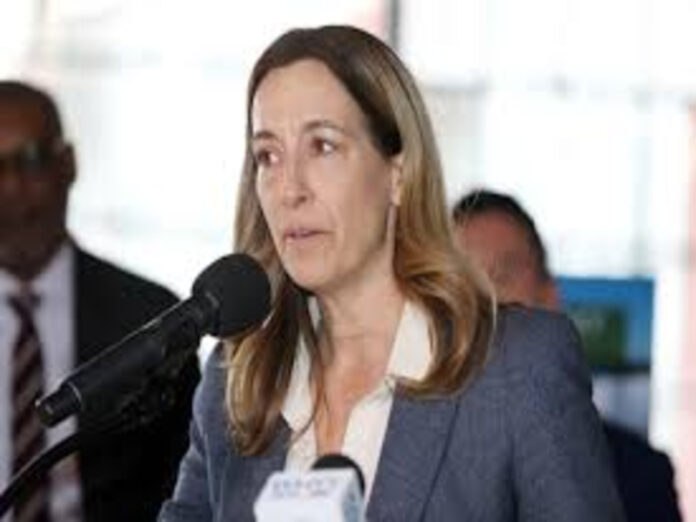
TRENTON, NJ.- New Jersey’s Democratic governor, Mikie Sherrill, is drawing sharp criticism after signing an executive order restricting Immigration and Customs Enforcement (ICE) operations on state-owned property, then publicly urging residents to record federal agents in the field, a move critics say risks provoking confrontations and placing both civilians and law-enforcement officers in danger.

Sherrill’s Executive Order No. 12, signed February 11, 2026, bars ICE from using state property to “launch” or “stage” enforcement operations and restricts access to nonpublic areas of state facilities, including government offices, residential medical facilities, child care centers, and state university dormitories, unless agents possess a judicial warrant, according to the governor’s office.
At the same time, the administration unveiled a state-run portal encouraging residents to upload photos and videos of ICE encounters, framing the initiative as a means of promoting transparency and accountability. Critics, however, say the combined effect of the order and the public call to film agents amounts to a deliberate attempt to chill federal law enforcement and inflame public hostility toward officers performing lawful duties.
“Get Your Phone Out”: Sherrill’s Televised Call To Action;
Sherrill escalated the controversy during a January 29, 2026, appearance on The Daily Show, where she explicitly encouraged residents to record ICE agents in public.
“If you see an ICE agent in the street, get your phone out,” Sherrill told the host, describing the state’s new reporting portal and asserting that federal immigration enforcement lacked sufficient oversight.
The remarks stunned many law-enforcement professionals, who warn that urging civilians to approach active enforcement scenes, often involving armed officers, emotionally charged suspects, or fast-moving situations, creates unnecessary risk. What may begin as “documentation” can rapidly devolve into obstruction, confrontation, or physical danger.
Federal Authority VS. State Defiance;
While the Sherrill administration portrays Executive Order No. 12 as a measured regulation of state property, legal experts note that immigration enforcement is an exclusively federal function, and state efforts perceived as obstructive routinely trigger court challenges.
That reality was underscored again this week by former Acting U.S. Attorney Alina Habba, who used her X account to reiterate her long-standing position that federal executive orders and enforcement directives are binding and will be carried out regardless of state political resistance.
Habba has repeatedly warned, both during her tenure and since, that state officials cannot nullify federal law through executive action or political pressure. Her message, consistent with prior public statements, stands in direct opposition to Sherrill’s approach and reflects the view of many federal prosecutors and agents who see the governor’s actions as a dangerous overreach.
“This Is How You Get People Hurt;”
Current and former law-enforcement officials say the most alarming aspect of Sherrill’s strategy is not merely the executive order, but her encouragement of public involvement in enforcement encounters.
Recording police activity in public spaces is generally lawful. Interfering is not. Critics argue that Sherrill’s rhetoric blurs that line, increasing the likelihood that civilians will crowd agents, shout directives, or attempt to intervene, all scenarios that can escalate rapidly.
Those concerns are reinforced by recent events in Minnesota, which Sherrill herself referenced in public remarks. A disputed ICE incident there earlier this year ended in a shooting and prompted federal prosecutors to dismiss charges after new evidence contradicted initial accounts, according to Reuters. The case fueled protests, hostility toward agents, and widespread public confusion, exactly the conditions critics warn Sherrill is inviting in New Jersey.
A Familiar Democratic Playbook;
Opponents say Sherrill’s actions mirror a broader Democratic strategy seen in sanctuary states and cities: restrict cooperation, limit access to facilities, publicly challenge federal agents, and mobilize activists under the banner of “oversight.”
Supporters frame the approach as civil rights protection. Critics call it soft obstruction, a political tactic that prioritizes ideological signaling over public safety and legal clarity.
By invoking Minnesota’s turmoil and urging residents to film ICE agents, Sherrill appears willing to turn New Jersey into the next frontline in a national immigration fight, regardless of the risks to residents or officers on the ground.
What Comes Next;
Several immediate questions now loom:
- Will federal authorities challenge Executive Order No. 12 in court as unlawful interference with federal enforcement?
- Will Sherrill’s video-upload portal deter misconduct or manufacture confrontation?
- Will residents mistakenly believe the governor’s encouragement shields them from legal consequences if encounters escalate?
As former U.S. Attorney Alina Habba and others have emphasized, state officials may control state property, but they do not control federal law.
For now, Governor Sherrill is betting that open defiance of ICE will play well politically. Critics warn it is reckless governance that risks placing New Jersey residents, state employees, and federal officers directly in harm’s way.
Editor’s Note:
This article was written by Jennifer Hodges, Political Editor, and is based on the State of New Jersey’s February 11, 2026 announcement of Executive Order No. 12, Governor Sherrill’s January 29, 2026 televised remarks on The Daily Show, contemporaneous reporting on related Minnesota incidents, and publicly documented statements and social-media commentary by former Acting U.S. Attorney Alina Habba reflecting her established position on federal enforcement authority. Englebrook Independent News includes only verifiable, contextualized statements and does not rely on unconfirmed or misattributed social-media claims.