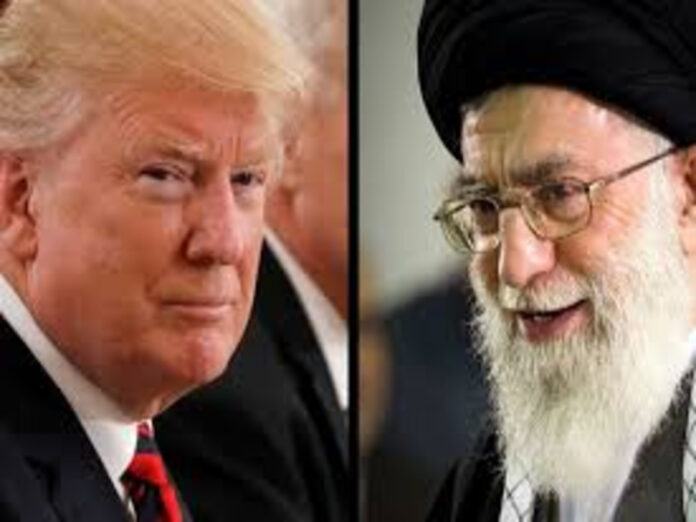
Second Round Of High-Stakes Negotiations Begins Tuesday Amid Military Buildup And Looming Deadlines
Tuesday, February 17, 2026, 7:30 A.M. ET. 5 Minute Read, By Jennifer Hodges, Political Editor & Art Fletcher, Executive Editor: Englebrook Independent News,
GENEVA, CH.- Indirect nuclear negotiations between the United States and Iran resumed Tuesday in Geneva under intense international scrutiny, as both sides confront a narrowing window for diplomacy and the increasing likelihood of military confrontation. The second round of high-stakes talks comes amid escalating regional tensions, a substantial U.S. military buildup in the Middle East, and renewed warnings from Washington that Tehran faces severe consequences if no agreement is reached.

The negotiations follow an initial round of indirect talks held earlier this month in Oman and are being mediated once again by the Omani government, which has played a central role as an intermediary between Washington and Tehran throughout early 2026.
U.S. envoys Steve Witkoff and Jared Kushner are representing Washington in Geneva, while Iran’s delegation is led by Foreign Minister Abbas Araqchi. The discussions remain indirect, with messages passed through Omani officials, reflecting the continued absence of formal diplomatic relations between the two adversaries.
Diplomacy Conducted Under Military Pressure;
President Donald Trump said Monday that he would be “indirectly involved” in the Geneva negotiations and warned that Iran “does not want to face the consequences of not making a deal.” His remarks come as the United States continues to mass significant military forces in the region, including additional carrier strike groups, long-range bombers, and air defense assets.
Senior administration officials have described the buildup as a deterrent designed to reinforce diplomacy, while making clear that military options remain firmly on the table should negotiations collapse.
Secretary of State Marco Rubio reiterated Washington’s position that the United States prefers a negotiated resolution but will not tolerate Iran retaining a nuclear weapons capability. U.S. officials have repeatedly emphasized that the current posture is intended to demonstrate seriousness and resolve.
Iran has responded to the military pressure with its own displays of force. In recent days, the Islamic Revolutionary Guard Corps conducted naval exercises near the Strait of Hormuz, a vital global shipping lane, underscoring Tehran’s ability to disrupt international energy markets if conflict erupts.
Core Dispute: Uranium Enrichment And Sanctions Relief;
At the heart of the Geneva talks is Iran’s nuclear program, specifically its uranium enrichment activities. The United States is demanding strict limitations, and potentially a full halt to enrichment levels that could enable nuclear weapons production.
Iran maintains that its nuclear program is peaceful and insists that enrichment for civilian purposes is a sovereign right. Iranian officials have indicated they may be willing to place limits on stockpiles or enrichment thresholds, but have categorically rejected a zero-enrichment framework.
Sanctions relief remains a critical Iranian demand. Tehran has argued that any meaningful nuclear concessions must be met with the lifting of U.S. economic sanctions that have severely constrained Iran’s economy for years.
Ahead of the talks, Foreign Minister Araqchi met in Geneva with International Atomic Energy Agency Director-General Rafael Grossi, signaling Tehran’s continued engagement with international nuclear oversight bodies even as disputes persist.
Time Running Out For Diplomacy;
Diplomatic and intelligence officials say time is rapidly running out for Iran to secure an agreement that avoids military confrontation. U.S. pressure has steadily intensified since Washington withdrew from the 2015 nuclear agreement in 2018 and reinstated sweeping sanctions.
Attempts to revive or replace the deal in 2025 ultimately collapsed, culminating in a brief but significant exchange of military strikes involving Israeli operations against Iranian targets and subsequent U.S. retaliation.
President Trump has warned in recent weeks that failure to reach an agreement could lead to what he described as a “very traumatic” outcome for Iran. Multiple reports indicate that contingency planning within Washington has included discussions of sustained military strikes, and, in more extreme scenarios, the destabilization of Iran’s ruling regime should negotiations fail entirely.
While U.S. officials have not publicly adopted regime change as a stated objective, the administration has made clear that Iran’s leadership faces a stark choice: abandon uranium enrichment ambitions or confront overwhelming force.
Global Stakes And Regional Consequences;
The outcome of the Geneva talks carries profound implications for global security. A successful agreement could ease tensions in the Middle East and stabilize global energy markets, which are already vulnerable to disruption. Conversely, a breakdown in negotiations could trigger a wider regional conflict with far-reaching economic and geopolitical consequences.
European allies and Gulf Arab states have urged restraint, warning that escalation could destabilize the region and undermine international security. However, with both Washington and Tehran entrenched in their positions, diplomats acknowledge that the margin for compromise is exceptionally narrow.
As talks continue behind closed doors in Geneva, the world is watching closely to see whether diplomacy can still prevail, or whether the standoff moves irreversibly toward confrontation.
Editor’s Note:
This article was written by Jennifer Hodges, Political Editor & Art Fletcher, Executive Editor, and is based on verified reporting from multiple international news agencies and official government statements and reflects developments as of Tuesday, February 17, 2026. All facts have been cross-checked for accuracy. The situation remains fluid, and Englebrook Independent News will continue to provide updates as negotiations proceed.