Escalating Conflict In The Persian Gulf Disrupts Global Energy Supply Chains, Forcing U.S. Officials To Consider Market Interventions & Emergency Measures To Stabilize Prices & Limit Inflation
Sunday, March 8, 2026, 9:00 P.M. ET. 6 Minute Read, By Haylee Ficuciello, Economy & Finance Editor: Englebrook Independent News,
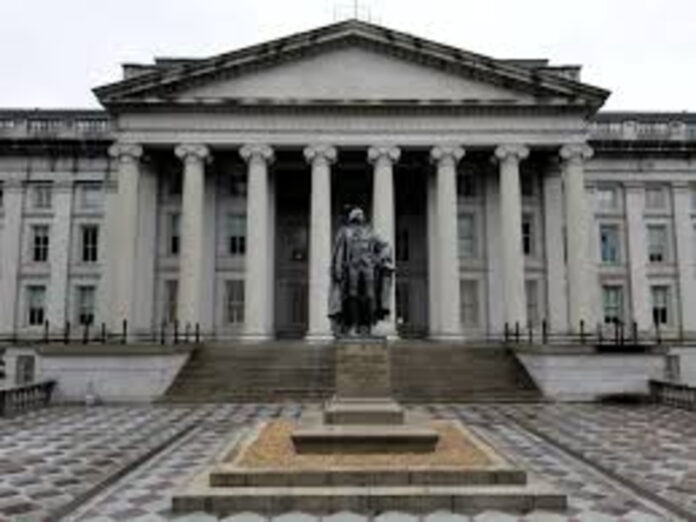
WASHINGTON, DC.- The U.S. Treasury Department and other federal agencies moved swiftly last week to address surging global oil prices triggered by the escalating war involving Iran, as policymakers warned that prolonged disruptions to energy supply could threaten economic stability both in the United States and worldwide.

The urgency follows a dramatic spike in crude prices and gasoline costs after military operations and retaliatory attacks disrupted shipping routes in the Persian Gulf, particularly the strategically vital Strait of Hormuz, a narrow maritime corridor responsible for transporting roughly one-fifth of the world’s oil supply.
As the conflict widened in late February and early March, tanker traffic through the strait declined sharply amid Iranian threats and attacks on shipping, sending global markets into a state of heightened volatility and forcing energy traders to factor in potential supply shortages.
The immediate economic result was a rapid surge in energy prices. U.S. crude oil futures climbed sharply in the days following the escalation of the war, while gasoline prices across the United States rose above $3.30 per gallon as supply fears rippled through global markets.
Treasury’s Push For Immediate Action;
Facing mounting pressure from energy markets and inflation concerns, U.S. Treasury officials began pressing for swift policy responses to stabilize oil prices.
According to reports from Washington, federal officials examined potential interventions in energy markets and broader supply measures designed to prevent a sustained spike in fuel costs.
Among the options considered were temporary regulatory steps affecting oil futures trading and coordination with international partners to maintain supply flows. The administration also reportedly explored short-term waivers to allow certain countries to purchase additional crude oil from alternative suppliers, a move intended to ease market tightness and dampen price volatility.
Such actions underscore the Treasury Department’s central role during periods of geopolitical energy shocks. While the Department does not directly control oil production, it oversees sanctions policy, financial market stability, and international economic coordination, all of which can influence global energy prices.
Why The Iran War Is Driving Oil Higher;
The surge in oil prices is fundamentally tied to the strategic geography of the Middle East energy trade.
The Strait of Hormuz, situated between Iran and Oman, functions as one of the most critical chokepoints in the global oil system. Roughly 20 million barrels of oil pass through the corridor each day, representing about 20 percent of worldwide consumption.
When conflict erupted following U.S.-Israeli strikes on Iranian targets and subsequent Iranian retaliation, tanker traffic collapsed as insurers and shipping companies suspended voyages through the high-risk zone.
This supply shock immediately reverberated through global energy markets. Brent crude prices surged above $80 per barrel within days and briefly surged over $90 as traders priced in the risk of further disruptions.
Some analysts now warn that if the conflict continues or if shipping through the strait remains severely restricted, oil prices could breach $100 per barrel and potentially climb even higher.
Inflation Risks And Economic Consequences;
For U.S. policymakers, the central concern is not merely the cost of oil itself but the broader inflationary ripple effect across the economy.
Energy costs directly affect transportation, manufacturing, and consumer goods prices. As fuel becomes more expensive, companies face higher operating costs, which are often passed on to consumers.
Economists say that prolonged energy disruptions could reverse recent progress in controlling inflation and potentially slow economic growth.
“If the conflict lasts only a week or two, the economic impact may be minimal,” Moody’s Analytics chief economist Mark Zandi said in a recent economic analysis. “But if it stretches into months, the consequences become meaningful for growth and inflation.”
Financial markets have already begun reacting to the geopolitical shock. Equity markets declined globally while government bond yields climbed as investors anticipated stronger inflation pressures and tighter monetary policy.
Meanwhile, analysts estimate the war has already pushed global oil prices up roughly 10–13 percent in the early stages of the conflict.
Administration Response And Energy Outlook;
Administration officials have attempted to reassure markets that the price spike may be temporary.
Energy Secretary Chris Wright said Sunday that the surge in fuel prices is likely to last “weeks, not months,” citing efforts to protect tanker traffic and increase global oil supply.
The United States and allied nations are also working to secure maritime routes in the Gulf and encourage production from other oil-exporting countries in order to offset lost shipments from the region.
Still, energy analysts caution that the trajectory of oil prices will ultimately depend on how long the conflict lasts and whether shipping through the Strait of Hormuz can resume safely.
If the war escalates further or spreads across the region, global energy markets could face one of their most significant disruptions since the early 2000s.
Economic Analysis: Why Oil Shocks Matter;
Historically, major geopolitical conflicts affecting oil supply have had profound economic consequences.
Oil shocks have the unique ability to simultaneously drive inflation higher while weakening economic growth, a phenomenon known as stagflation. This dynamic was most famously experienced during the 1973 Arab oil embargo and again during the 1979 Iranian Revolution.
The current crisis shares several characteristics with those earlier shocks:
• a sudden disruption of a critical energy transit route
• geopolitical uncertainty affecting shipping and insurance markets
• rapid increases in crude oil and gasoline prices
However, the modern energy system is somewhat more resilient than in past decades. Increased U.S. oil production, strategic petroleum reserves, and diversified global supply networks provide policymakers with more tools to cushion economic shocks.
Nevertheless, energy remains the lifeblood of the global economy, and sudden price spikes continue to carry significant economic risks.
For that reason, the Treasury Department’s push for swift action reflects a recognition that stabilizing oil markets is not merely an energy policy concern; it is a central pillar of economic stability.
Editor’s Note:
This article was written by Haylee Ficuciello, Economy & Finance Editor, and is based on publicly available information from international news agencies, government statements, and economic analyses regarding the ongoing war in Iran and its impact on global energy markets. With research from the 1973 Arab Oil Embargo and the 1979 Iranian Revolution. Because the conflict and oil markets remain fluid, certain figures, including crude oil prices and gasoline averages, may fluctuate as new developments emerge.
Support Independent Journalism
Englebrook Independent News is powered by readers like you. Your donation helps us continue delivering trusted local, national, and political news — free for everyone.
Donate Today