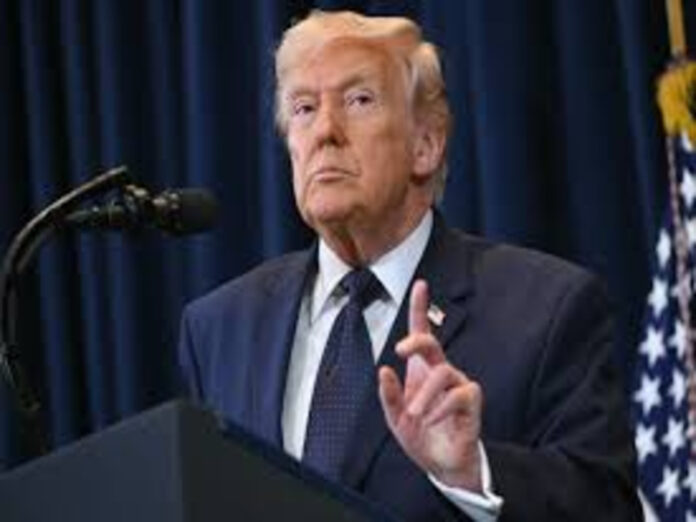
President Pressures Alliance To Aid U.S. Operations Against Iran & Reopen The Strait Of Hormuz As Tensions Expose Divisions Within NATO
Monday, March 16, 2026, 7:00 A.M. ET. 5 Minute Read, By Jennifer Hodges, Political Editor: Englebrook Independent News,
WASHINGTON, DC.- President Donald Trump issued a stark warning to NATO allies this week, declaring the alliance could face a “very bad” future if member nations fail to support U.S. efforts connected to the escalating conflict with Iran and the reopening of the strategic Strait of Hormuz.

In an interview published Sunday, Trump sharply criticized several NATO countries for what he described as a lack of meaningful assistance in securing the crucial Persian Gulf shipping lane, which has been effectively disrupted amid the ongoing U.S.–Iran confrontation. The president argued that nations benefiting from Gulf oil shipments should contribute military resources to restore the flow of energy through the waterway.
The warning highlights a widening rift inside the North Atlantic Treaty Organization as the United States pushes allies to become more directly involved in the Middle East crisis.
A Strategic Chokepoint At The Center Of The Crisis;
The Strait of Hormuz, a narrow maritime corridor between Iran and Oman, remains one of the most strategically important oil transit routes in the world. Roughly 20 percent of global oil and liquefied natural gas shipments pass through the strait, making any disruption there a significant concern for the global economy.
Since the outbreak of hostilities between U.S. and Iranian forces, shipping traffic in the region has been severely impacted. Energy markets reacted swiftly: oil prices have surged dramatically during the conflict, climbing roughly 45 percent to about $106 per barrel, but have since dropped, according to reports tied to the crisis.
Trump has called on NATO countries and other global powers to deploy assets such as naval minesweepers, air defenses, and special forces to neutralize threats and secure the strait.
“If there’s no response,” the president warned, “it will be very bad for the future of NATO.”
Growing Friction Inside NATO;
The remarks have exposed a deeper debate inside the alliance about NATO’s role in conflicts beyond Europe.
Several European leaders have signaled reluctance to commit military forces to the operation. Germany’s foreign minister, for example, said NATO has not made any decision to assume responsibility for security operations in the Strait of Hormuz, emphasizing that such a mission would require formal alliance approval.
The muted response reflects long-standing tensions between Washington and European capitals over burden-sharing and military commitments. Trump has frequently criticized NATO members for relying heavily on the United States for defense while contributing fewer resources themselves.
In recent comments, he also expressed frustration with the United Kingdom’s delayed naval contribution and suggested that allies benefiting from Gulf energy supplies should shoulder more responsibility for protecting those routes.
Pressure On China And Other Oil-Dependent Nations;
Trump’s warning was not limited to NATO members. The president also pointedly referenced China, which imports large volumes of oil passing through the Strait of Hormuz.
He indicated that a planned summit with Chinese President Xi Jinping could be postponed unless Beijing clarifies its position on helping secure the waterway.
The administration argues that nations dependent on Gulf energy have a direct economic stake in maintaining free navigation through the strait.
A Wider Middle East Conflict;
The warning comes amid the largest U.S. military buildup in the Middle East in more than two decades. Since early 2026, American forces have deployed additional carrier groups, aircraft, and missile defenses to the region as tensions with Iran escalated into open conflict.
U.S. officials have framed the buildup as a response to Iran’s regional activities and its nuclear ambitions, as well as its role in destabilizing shipping routes and energy infrastructure across the Gulf.
At the same time, Iran has signaled it could allow maritime traffic for some countries while restricting passage for the United States and Israel, a move analysts say could be intended to divide the international response.
NATO’s Uncertain Path;
Trump’s warning underscores an enduring tension within NATO: the alliance was founded to defend Europe and North America, yet it has repeatedly been drawn into conflicts far beyond its original geographic scope.
Critics argue that expanding NATO’s operational reach into Middle Eastern disputes risks overextending the alliance and entangling member states in wars not directly tied to collective defense.
Supporters of the administration’s position, however, contend that safeguarding critical global trade routes, especially those carrying energy supplies, remains essential to the economic security of Western nations.
For now, NATO leaders appear cautious, leaving the alliance facing a difficult balancing act between maintaining unity and avoiding deeper involvement in another volatile conflict in the Middle East.
Editor’s Note:
This article was written by Jennifer Hodges, Political Editor, and is based on verified reporting and statements published March 15–16, 2026, regarding President Donald Trump’s warning that NATO could face a “very bad future” if member states fail to assist U.S. efforts connected to the Iran conflict and the reopening of the Strait of Hormuz. Information was corroborated through multiple international news reports and official statements available at the time of publication.
Support Independent Journalism
Englebrook Independent News is powered by readers like you. Your donation helps us continue delivering trusted local, national, and political news — free for everyone.
Donate Today