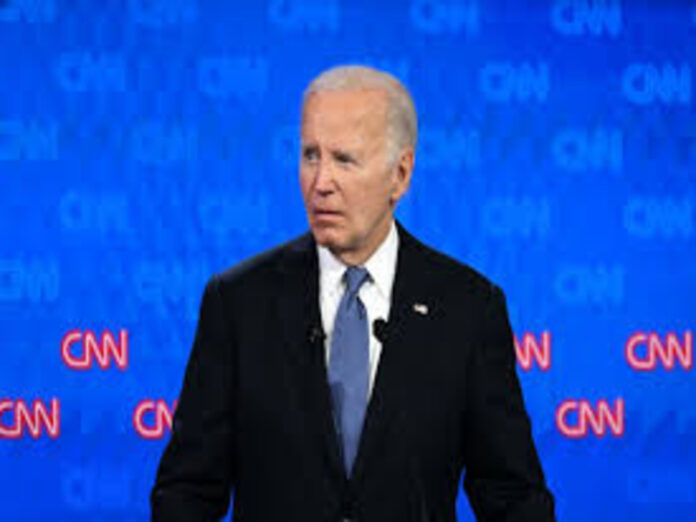
What The Constitution Allows, What It Forbids, And Why The Courts, Not Social Media, Will Decide
Sunday, December 7, 2025, 9:45 A.M. ET. 4 Minute Read, By Jennifer Hodges, Political Editor: Englebrook Independent News,
WASHINGTON, DC.- Following President Donald Trump’s explosive social media declaration that he is “terminating all executive orders and revoking all pardons signed by the autopen during Joe Biden’s presidency,” Americans are left with a critical legal question:
Can any president, former or sitting, actually do that?
The short legal answer is no, not unilaterally, and not retroactively by declaration alone. But the longer constitutional explanation reveals why Trump’s challenge, while not immediately enforceable, could still reshape how courts and Congress view presidential authorization in the modern administrative state.

First, What Is The Autopen, Legally Speaking?
An autopen is a mechanical device that reproduces a person’s signature. It has been used for decades by presidents of both parties, including:
- Dwight Eisenhower
- Barack Obama
- Donald Trump
- Joe Biden
The U.S. Department of Justice’s Office of Legal Counsel (OLC) formally ruled in 2011 that a president may lawfully sign legislation and official documents using an autopen, provided the president has personally authorized the action.
That single condition, personal authorization, is the entire legal pillar supporting the legitimacy of autopen.
Not present.
Not handwriting.
Not public visibility.
Authorization is everything.
Executive Orders: Reversible, But Only Going Forward;
Under constitutional law:
- Executive orders are not permanent law.
- They can be:
- Reversed by a subsequent president.
- Overruled by Congress through legislation.
- Struck down by the federal courts.
However, a key limitation applies:
A president can reverse an executive order only prospectively, not retroactively.
That means:
- Policies can be halted going forward.
- But actions already completed under valid orders generally remain legally intact unless courts rule otherwise.
President Trump could issue new executive orders nullifying Biden-era policies from that point forward, but he cannot legally erase the past by proclamation alone.
Presidential Pardons: Constitutionally Final;
Presidential pardon power is one of the strongest unilateral authorities granted in the U.S. Constitution under Article II.
Once properly issued:
- Pardons are considered final and irrevocable.
- They cannot be rescinded by a future president.
- They cannot be overturned by Congress.
- Courts can invalidate a pardon only in cases of proven fraud, forgery, or lack of constitutional authority at the time of issuance.
Trump’s claim to revoke Biden-era autopen pardons therefore faces the highest constitutional barrier to presidential power.
The only proof that:
Biden did not authorize the pardons, or
The documents were fraudulently executed without lawful authority
would give courts a legal pathway to invalidate them.
Where The Legal Vulnerability Actually Exists;
The central legal vulnerability is not the autopen itself—it is the authorization chain behind it.
If future court proceedings or the congressional depositions were to establish that:
- Senior White House staff issued orders without direct presidential consent, or
- Authorization was presumed rather than confirmed, or
- Cognitive incapacity rendered consent legally doubtful at key moments,
Then specific Biden-era actions could face targeted legal challenges for the first time in U.S. history.
Such cases would not invalidate the entire presidency, but they could unravel individual executive orders, regulatory actions, or pardons one by one.
Why Trump’s Declaration Still Matters;
Legally, Trump’s statement is not self-executing.
Politically and strategically, it accomplishes three things:
It reframes Biden’s final years in office as an authorization scandal, not merely a health controversy.
It signals to courts that future challenges will focus narrowly on consent and delegation, rather than on policy disagreements.
It forces Democrats to defend not just what Biden signed, but whether he truly authorized it.
That shift alone changes the legal battlefield.
The Courts Will Decide, Not Social Media;
Despite the heat surrounding President Trump’s announcement, constitutional law remains blunt:
- Social media posts do not carry legal force.
- Only:
- Courts
- Congress
- Or properly issued executive actions
can modify federal authority.
Any real legal undoing of Biden-era autopen actions will require:
- Subpoenaed authorization records and subsequent deposition transcripts.
- Sworn medical testimony.
- Document-chain audits.
- And years of federal litigation.
What Happens Next;
Legal scholars widely expect that the next phase will involve:
- Targeted lawsuits challenging specific late-term executive actions.
- Discovery battles over who approved what, and when.
- Renewed congressional inquiries into presidential capacity and staff governance.
The broader constitutional crisis President Trump is signaling may not be resolved in one election cycle, or even in one decade.
But one truth is already settled:
The age of unquestioned presidential authorization in the autopen era is over.
Editor’s Note:
This legal explainer is based on established U.S. constitutional law, Office of Legal Counsel precedent on autopen authorization, Article II presidential powers, Supreme Court interpretations of executive authority and pardons, and President Donald Trump’s verified public statements from late November and early December 2025. As of this publication, no federal court has ruled any Biden-era executive order or pardon invalid based on autopen use. Englebrook Independent News will continue to distinguish between verified legal fact, pending judicial review, and political interpretation.