Executive Order Targets Price Fixing And Anti-Competitive Practices As Administration Moves To Stabilize Food Prices And Support U.S. Farmers
Monday, December 8, 2025, 2:00 P.M. ET. 4 Minute Read, By Haylee Ficuciello, Economy & Finance Editor: Englebrook Independent News,
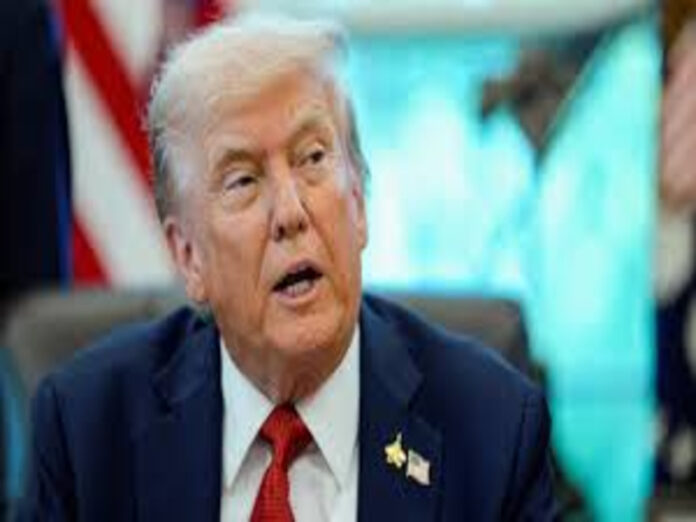
WASHINGTON, DC.- On Saturday, December 6, 2025, President Donald J. Trump signed a sweeping executive order establishing new Food Supply Chain Security Task Forces within both the U.S. Department of Justice (DOJ) and the Federal Trade Commission (FTC), targeting price fixing, anti-competitive conduct, and foreign influence within America’s food supply network.

Simultaneously, the administration announced a $12 billion nationwide aid package for American farmers, marking a two-front strategy designed to stabilize food prices for consumers while strengthening the agricultural backbone of the U.S. economy.
New Task Forces To Target Price Fixing And Market Manipulation;
The executive order directs the DOJ and the FTC to immediately establish specialized task forces to investigate vulnerabilities in the food supply chain that may be driving historically high grocery prices.
Under the order:
- The DOJ task force is authorized to pursue criminal investigations into price fixing, market collusion, and cartel-like behavior across food production and distribution sectors.
- The FTC task force will initiate civil enforcement actions and propose regulatory remedies to restore market competition.
- Both agencies are tasked with examining industry consolidation, foreign ownership risks, and anti-competitive conduct in sectors such as:
- Meat processing
- Seeds and fertilizer production
- Agricultural equipment manufacturing
- Food distribution and logistics
The task forces must submit findings to congressional leadership within 180 days, with a comprehensive follow-up report at the one-year mark. Legislative recommendations may follow if systemic abuses are identified.
White House officials argue that consolidation in food processing and agricultural inputs has reduced competition, inflated prices, and placed both consumers and farmers at the mercy of a handful of dominant firms.

$12 Billion Aid Package To Stabilize American Agriculture;
Alongside the new enforcement initiative, the White House unveiled a $12 billion federal aid package designed to provide immediate relief to farmers grappling with rising input costs, export disruptions, and volatile commodity prices.
According to administration officials:
- Approximately $11 billion will flow through a new Farmer Bridge Assistance Program, primarily benefiting producers of:
- Corn
- Soybeans
- Wheat
- The remaining $1 billion will be distributed among specialty crop producers and regional farming operations.
- Funds will be used to offset:
- Rising fertilizer and seed costs
- Fuel expenses
- Equipment financing pressures
Treasury and Agriculture Department leaders acknowledged that American farmers have borne the brunt of supply-chain disruptions and global trade volatility, with many forced to absorb rapidly rising operating costs while selling into unstable commodity markets.
Administration Frames Action as Inflation and National Security Measure;
White House officials framed the dual effort, structural enforcement plus direct farmer support, as a comprehensive move to curb food inflation and strengthen national food security.
In briefing materials released with the order, the administration cites:
- Prior multimillion-dollar price-fixing settlements across the food and agricultural industries
- Heavy foreign ownership in certain critical processing and production sectors
- Supply-chain bottlenecks that magnified post-pandemic inflation pressures
Officials emphasized that food production is now regarded not only as an economic issue, but also as a strategic national security concern.
What Comes Next;
Over the next six months:
- The DOJ and FTC are expected to begin formal investigations into suspected anti-competitive practices.
- Civil and criminal enforcement actions may follow if violations are uncovered.
- Additional regulatory reforms could be proposed to curb market concentration.
Farmers approved for the Farmer Bridge Assistance Program are expected to receive initial payments in early 2026, offering relief ahead of the next major planting season.
Meanwhile, Congress may soon face proposals tied to supply-chain reform, competition law enforcement, and agricultural market regulation if the task forces identify systemic abuse.
Editor’s Note:
This article is based on the official Executive Order signed by President Donald J. Trump on Saturday, December 6, 2025, along with administration briefings and agency statements outlining the creation of the Food Supply Chain Security Task Forces and the $12 billion Farmer Bridge Assistance package. Reporting reflects verified government releases and confirmed federal policy actions.
— Haylee Ficuciello, Economy & Finance Editor: Englebrook Independent News, All Rights Reserved.