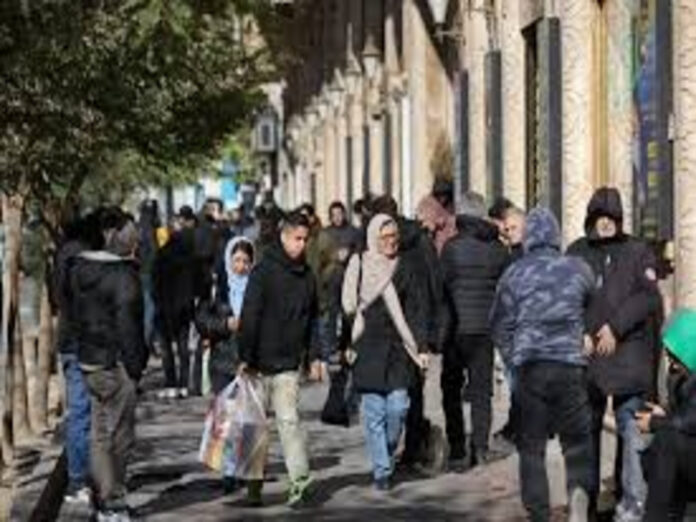
President Signals Possible U.S. Intervention As Deadly Economic Unrest Spreads Across Iran
Friday, January 2, 2026, 6:30 P.M. ET. 4 Minute Read, By Jennifer Hodges, Political Editor: Englebrook Independent News,
WASHINGTON, DC.- President Donald Trump issued a stark warning to Iran on Friday, declaring that the United States is prepared to intervene if Iranian security forces “shoot and violently kill peaceful protesters,” as widespread demonstrations fueled by severe economic distress continue across the country.
In a statement posted to Truth Social early Friday morning, Trump wrote that if Iran “violently kills peaceful protesters,” the United States “will come to their rescue,” adding that the U.S. is “locked and loaded and ready to go.”

The president’s remarks came as Iran faces its most significant wave of unrest in nearly three years, with protests erupting in multiple provinces amid a sharp collapse in the national currency, surging inflation, and rising costs for food, fuel, and basic necessities.
Economic Collapse Fuels Unrest;
The demonstrations began late last weekend after shopkeepers and workers protested what they described as government mismanagement of the economy following a rapid devaluation of Iran’s rial. The unrest quickly expanded into broader anti-government protests, with demonstrators chanting slogans critical of Iran’s leadership and economic policies.
International reporting indicates that at least six to seven people have been killed during clashes connected to the protests, though casualty figures remain fluid and difficult to independently verify due to restrictions on press access and communications inside Iran.
Reports from multiple outlets describe funerals for slain protesters becoming flashpoints for additional demonstrations. At the same time, security forces have responded with force in several cities, including in the southeastern region of Zahedan.
Iran’s economy has been under sustained pressure for years, burdened by international sanctions, high inflation, and declining oil revenues. Economic analysts note that the current unrest reflects deep frustration among ordinary Iranians, who are facing declining purchasing power and limited employment opportunities.
Tehran Issues Warnings Of Retaliation;
Iranian officials responded forcefully to Trump’s comments, accusing the United States and Israel of attempting to destabilize the country.
Ali Larijani, secretary of Iran’s Supreme National Security Council and a former parliament speaker, warned that U.S. intervention would plunge the region into “chaos” and place American troops at risk.
Ali Shamkhani, an adviser to Supreme Leader Ayatollah Ali Khamenei, said that any “interventionist hand” approaching Iran’s security interests “will be cut.” Parliament Speaker Mohammad Bagher Qalibaf further warned that U.S. military bases and forces in the region would be considered “legitimate targets” if American action were taken.
Despite the heightened rhetoric, U.S. officials indicated there were no immediate changes to American troop levels or military posture in the Middle East following Trump’s statement.
A Volatile Moment In A Familiar Standoff;
U.S. administrations have historically walked a careful line when responding to unrest in Iran, often voicing support for human rights while avoiding language that could be used by Tehran to justify crackdowns by portraying protests as foreign-driven.
Analysts caution that Trump’s blunt warning, while signaling support for demonstrators, could also be used by Iranian authorities to legitimize harsher repression or rally nationalist sentiment against perceived foreign threats.
On the ground, protests continue amid heavy security deployments, sporadic internet disruptions, and mounting public anger as Iran’s economic crisis shows little sign of easing.
What Comes Next Remains Unclear;
President Trump did not specify what form U.S. intervention might take if protesters are killed, leaving open a wide range of possibilities, including diplomatic pressure, economic sanctions, cyber operations, or military action.
As demonstrations continue and casualty figures evolve, the situation places Iran’s leadership under renewed pressure while raising the stakes in an already volatile U.S.–Iran relationship.
Editor’s Note:
This article is based on verified public statements from President Donald Trump and corroborated reporting from multiple international news organizations as of January 2, 2026. Casualty figures and conditions inside Iran remain subject to change due to restricted access, government-imposed communication limits, and rapidly evolving events. Fact verification and editorial review were conducted by Jennifer Hodges, Political Editor, and Art Fletcher, Executive Editor, Englebrook Independent News.