As Governor Murphy Exits, Deficits Explode, Streets Decay, & Once Again Political Accountability Disappears
Sunday, January 4, 2025, 12:30 P.M. ET. 6 Minute Read, Op-Ed, By Jennifer Hodges, Political Editor: Englebrook Independent News,
TRENTON, NJ.- I spent New Year’s Day and the following Friday walking the streets of New Jersey, not as a resident, but as someone who once called this state home and returned with open eyes. What I encountered was not simply a decline. It was disorder, neglect, and a political system that has lost both its compass and its courage.

Across the country, rampant government fraud has recently been exposed in states such as Minnesota, Maine, and Ohio, with billions of taxpayer dollars misdirected through loosely monitored public programs. Those revelations demand more than outrage; they demand introspection. If Washington is serious about accountability, New Jersey must be next in line for a hard, unsparing audit.
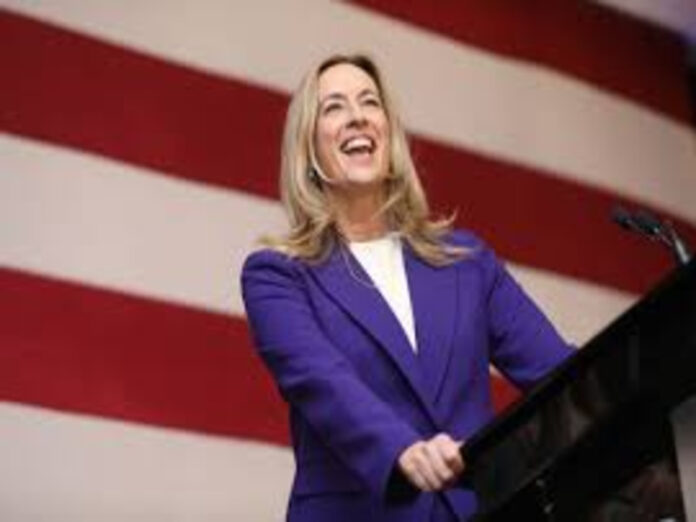
As Phil Murphy prepares to leave office on January 20, 2026, and Democrat mayor-elect Mikie Sherrill prepares to take her oath, the state that they inherited and about to inherit is financially weaker, socially more fractured, and far less safe than the one Murphy assumed eight years ago.
When Murphy took office, New Jersey held a nearly $600 million surplus. Today, the state faces an estimated $1.5 billion deficit, a staggering reversal under a governor who promised fiscal responsibility and “progressive stewardship.” That promise collapsed under the weight of reckless spending, ideological vanity projects, and a governing philosophy that treats taxpayers as an endless resource.
This is not an isolated failure.
New York now faces at least a $7 billion budget deficit for the 2026–2027 fiscal year. California projects an $18 billion shortfall, with analysts warning that continued spending could push that number closer to $35 billion. Different states, different slogans, same Democratic playbook, same outcome.
So again, the question must be asked: where did the money go?
The Streets Tell The Truth;
Walking through Newark, Paterson, Camden, and parts of Jersey City, the answer became disturbingly clear. Homeless encampments stretch across sidewalks and public parks. Storefronts are shuttered. Police presence is thin. Open drug use is no longer hidden; it is tolerated.
During my visit, I spoke with two men who served in the Afghanistan War. Both are now homeless. Both told me they were unable to access housing assistance after months of trying. One described being passed between agencies “like a case number, not a human being.” These are not isolated stories. They are systemic failures.
New Jersey’s political class claims compassion, yet delivers indifference. Veterans sleep on concrete while bureaucrats draft press releases.
Crime Without Consequences;
What struck me just as forcefully as homelessness was the atmosphere of lawlessness. Violent crime may be carefully massaged in official statistics, but residents know the truth. Carjackings remain common. Retail theft is rampant. Drug dealing is conducted in plain sight.
New Jersey’s so-called criminal justice “reforms” have produced predictable results: repeat offenders released, victims forgotten, and police officers demoralized. Prosecutors decline charges in the name of equity. Judges prioritize ideology over deterrence. And communities, particularly minority and working-class neighborhoods, pay the price.
Drug abuse compounds the crisis. Fentanyl has carved a brutal path through cities and suburbs alike. Overdoses continue to claim lives at alarming rates, yet enforcement has been replaced with slogans. Harm reduction without accountability is not compassion; it is surrender.
This is what happens when the government stops believing in consequences.
Selective Outrage And Skewed Priorities;
The contrast between what New Jersey chooses to fight for and what it ignores could not be more evident.
The state eagerly joined a 19-state lawsuit opposing Donald Trump after his administration moved to restrict Medicaid funding for hospitals performing transgender surgeries on minors. Legal teams mobilized instantly. Press conferences followed. Moral outrage was amplified.
Yet when it comes to funding housing for homeless residents, mental health services for addicts, or shelters for veterans, the state suddenly pleads poverty.
This is not a lack of resources. It is a distortion of values.
The Immigration Illusion;
One unexpected observation during my visit was the relative absence of large numbers of illegal immigrants visibly living on the streets. For a state that markets itself as a sanctuary, this seemed contradictory.
It is not.
New Jersey’s policies funnel assistance through layered systems that obscure costs and outcomes from taxpayers. The governor prefers the term “undocumented people,” but semantics do not change the fiscal reality. Aid is provided, often generously, while transparency remains scarce.
Meanwhile, long-time residents are crushed under some of the highest property taxes in America. Small businesses flee. Families relocate. The tax base erodes, even as spending grows.
From Opportunity To Entitlement;
My grandparents arrived in the United States in the early 1920s. They worked. They assimilated. They asked nothing of the state. That was not exceptional; it was the American expectation.
Today, the system rewards dependency over contribution. Federal and state assistance has become normalized rather than temporary. Questioning this shift is labeled as racist. But refusing to question it is financial malpractice.
We are the wealthiest nation on earth. Compassion does not require chaos. But Democratic governance increasingly delivers both.
A Party That Forgot Who It Serves;
I was raised in a Democratic family. I was a registered Democrat for most of my adult life. Four years ago, I left the party, not because I changed, but because it did.
What I see now in New Jersey is a Democratic Party unmoored from fiscal reality, allergic to accountability, and dismissive of the very people it claims to represent. This is not about left versus right. It is about competence versus collapse.
Republican-run states deserve scrutiny where they fail, and many do. But New Jersey’s decline is especially tragic because it was entirely self-inflicted.
As I left the state once again, I felt the same unease that drove so many families away years ago: the sense that New Jersey is sliding deeper into debt, disorder, and denial, governed by leaders more focused on ideology than on outcomes and on optics than on lives.
The American electorate must demand better. In New Jersey and beyond.
Because if this is the Democratic model, then the reckoning is not coming; it is already here.
Editor’s Note:
This op-ed reflects the personal observations and political analysis of Jennifer Hodges. Fiscal figures cited are based on publicly reported state budget projections and official government disclosures available at the time of publication. Englebrook Independent News remains committed to independent, evidence-based journalism and welcomes substantive debate grounded in verifiable facts.