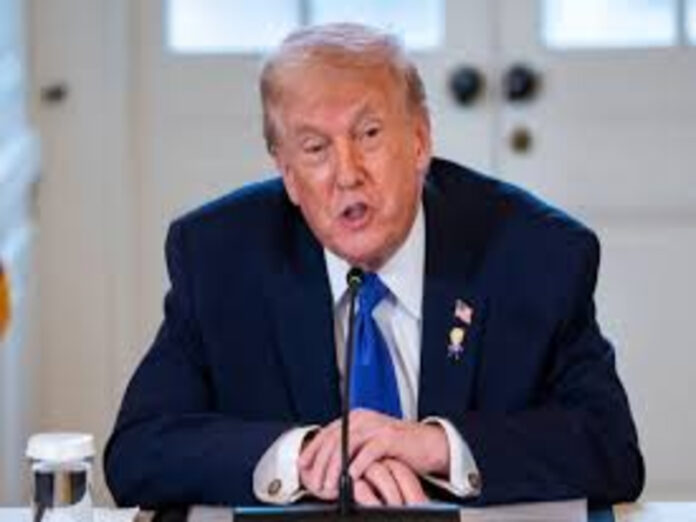
President Moves To Curb Record Borrowing Costs As Both Parties Confront Rising Consumer Debt & Credit-Card Abuses
Saturday, January 10, 2026, 4:05 P.M. ET. 4 Minute Read, By Haylee Ficuciello, Economy & Finance Editor: Englebrook Independent News,
WASHINGTON, DC.- President Donald Trump on Friday announced a major new consumer-finance initiative, calling for a one-year federal cap on credit-card interest rates at 10 percent, beginning January 20, 2026, as part of his administration’s effort to shield American households from what he described as predatory lending practices by the credit-card industry.

In a statement posted to Truth Social, Trump framed the move as a direct intervention to stop what he said were excessive and financially destructive interest rates being imposed on millions of Americans.
“Effective January 20, 2026, I, as President of the United States, am calling for a one-year cap on Credit Card Interest Rates of 10%,” Trump wrote. “Please be informed that we will no longer let the American Public be ‘ripped off’ by Credit Card Companies.”
The announcement revives a core promise Trump made during the 2024 presidential campaign, a pledge that many Wall Street analysts and banking groups dismissed at the time, arguing that such a policy would require congressional action. Trump, now in office, is pressing lawmakers to turn the promise into law.
A Direct Challenge To The Credit-Card Industry;
Credit-card interest rates have surged to historic highs over the past several years, with many major issuers charging 25 percent to more than 30 percent APR, particularly to lower-income and moderate-credit borrowers. Those rates have dramatically increased the cost of carrying balances, often turning small debts into long-term financial traps.
Trump’s proposal, if enacted, would amount to the most aggressive federal intervention into consumer credit pricing in decades.
Supporters of the cap argue that today’s rates have gone far beyond risk-based pricing and have instead become a mechanism by which credit-card companies extract enormous profits from financially vulnerable consumers, driving many into bankruptcy, ruined credit, and long-term financial instability.
Credit Access Versus Consumer Protection;
Financial analysts say a 10 percent cap would likely cause some tightening in credit approvals, particularly for borrowers with weak or damaged credit. Banks may be less willing to issue cards to applicants who represent higher default risk if they cannot offset that risk through higher interest rates.
However, consumer advocates counter that this is precisely the point.
Under the current system, millions of Americans are approved for credit cards that carry exorbitant interest rates so high that repayment becomes mathematically unrealistic. In many cases, borrowers can make payments for years and still see balances grow rather than shrink.
The cap would not only lower interest costs, but it would also prevent many consumers from being issued credit products that are structurally designed to push them toward financial collapse.
Supporters argue this would reduce long-term household debt, defaults, and bankruptcies, while forcing lenders to be more responsible in determining who should and should not receive credit.
Congress Holds The Key;
Republicans currently hold a narrow majority in both the House of Representatives and the Senate, giving Trump a potential legislative pathway if party leadership decides to prioritize the issue.
Both Republicans and Democrats have introduced bills in recent years aimed at capping credit-card interest rates, typically in the 15 to 18 percent range, but none have yet become law.
Trump did not explicitly endorse any specific bill in his Truth Social post, leaving open the question of whether the White House will support existing legislation or push for a new measure to codify the 10 percent cap.
Under current law, interest rates are largely determined by market forces and state-based banking rules. A binding nationwide cap would almost certainly require congressional approval.
Political Reaction;
Democratic lawmakers who have long supported interest-rate caps welcomed Trump’s renewed focus on the issue but criticized him for not acting sooner on his 2024 campaign pledge.
Some Republicans expressed concern about potential impacts on lending markets, while others praised the proposal as a long-overdue crackdown on financial practices they say have harmed working-class families for decades.
Despite the political debate, there is broad bipartisan agreement in Congress that credit-card rates have reached unsustainable levels for American households.
What Happens Next;
Trump’s announcement places consumer credit reform at the center of Washington’s economic agenda for early 2026.
If Congress acts, millions of Americans could see immediate reductions in interest charges on their existing credit-card balances, while future card approvals would likely be based on more realistic assessments of a borrower’s ability to repay without being buried by compounding interest.
Whether the proposal becomes law or remains a political flashpoint will depend on how quickly lawmakers move, and whether financial industry opposition can once again block reform.
Editor’s Note:
This article is based on President Donald Trump’s public statement posted on Truth Social on Friday, January 9, 2026, as well as verified congressional and economic reporting regarding credit-card interest rates and prior legislative efforts to cap them. Englebrook Independent News will continue to monitor congressional action, financial-industry response, and regulatory developments related to this proposal and provide updates as they occur.