“All Options” Remain On The Table As Washington Condemns Protest Crackdown
Friday, January 16, 2026, 9:15 A.M. ET. 4 Minute Read, By Jennifer Hodges, Political Editor: Englebrook Independent News,
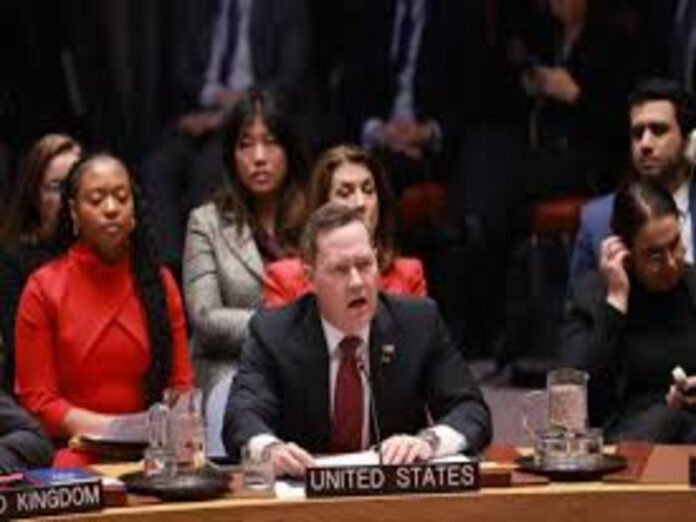
MANHATTAN, NY.- The United States delivered a stark warning to Iran during an emergency meeting of the United Nations Security Council on Thursday, declaring that “all options are on the table” as Washington accused Tehran of carrying out a violent crackdown on nationwide protests challenging Iran’s clerical leadership.
U.S. Ambassador to the United Nations Mike Waltz told the 15-member Security Council that President Donald Trump “has made it clear all options are on the table to stop the slaughter,” framing the administration’s position as both a moral stand with Iranian demonstrators and a direct message to Iran’s leadership.

The emergency session, convened at the request of the United States, quickly evolved into a sharp diplomatic confrontation. Iranian officials rejected the accusations outright, Russia accused Washington of interference, and United Nations leadership urged restraint amid growing concern that escalating rhetoric could further destabilize the region.
U.S. Frames Warning As Pressure Campaign;
In his remarks, Ambassador Waltz said the United States stands with what he described as the “brave people of Iran,” arguing that the scale of unrest and the regime’s response represent a pivotal moment for the country.
Waltz dismissed Tehran’s claims that the protests are the result of foreign influence, saying the Iranian government is “afraid of its own people” and is using force to suppress internal dissent.
The meeting followed weeks of unrest inside Iran, with activists and human rights organizations alleging widespread violence by state security forces. While casualty figures remain difficult to independently verify due to restricted access and communications, activists cited by international media outlets have claimed that thousands may have been killed since the protests began.
White House Signals Caution While Maintaining Threat;
The Security Council appearance followed days of heightened statements from Washington, including public warnings from President Trump suggesting possible intervention if violence continued.
By Thursday, administration messaging reflected a mix of pressure and restraint. The president indicated he had received information suggesting that killings had slowed and said he believed there was no active plan by Iranian authorities to conduct mass executions.
White House Press Secretary Karoline Leavitt reinforced the administration’s stance, stating that U.S. officials had communicated directly to Iranian counterparts that there would be “grave consequences” if violence against civilians persisted, reiterating that “all options remain on the table.”
Iran Warns of Retaliation;
Iran’s Deputy Ambassador to the United Nations, Gholamhossein Darzi, forcefully rejected U.S. allegations, accusing Washington of spreading “lies” and distorting facts to justify political pressure.
Darzi stated that Iran does not seek escalation, but warned that any attack, “direct or indirect,” would be met with what he described as a “decisive, proportionate, and lawful response.” He characterized the warning not as a threat, but as a statement of Iran’s legal right to self-defense.
Russia Accuses U.S. Of Interference;
Russia’s Ambassador to the United Nations, Vasily Nebenzia, echoed Tehran’s position, accusing the United States of using the Security Council to legitimize interference in Iran’s internal affairs.
Nebenzia warned that military threats could further inflame the crisis and urged what he called “hot heads” in Washington and elsewhere to exercise restraint, cautioning against actions that could spiral into broader conflict.
U.N. Urges Restraint Amid Rising Tensions;
United Nations Secretary-General António Guterres, speaking through senior U.N. official Martha Pobee, called on all parties to exercise “maximum restraint” and avoid steps that could lead to further loss of life or regional escalation.
The session also included testimony highlighting the U.S. effort to amplify dissident voices. Iranian-American activist Masih Alinejad addressed the Council, comparing the Iranian government’s actions to extremist organizations and urging the international community to act decisively to prevent further bloodshed.
Sanctions And Diplomatic Pressure Continue;
Alongside its diplomatic push, the United States has intensified economic pressure on Tehran. Washington recently announced additional sanctions targeting Iranian officials accused of overseeing the protest crackdown, as well as individuals and companies linked to what U.S. officials describe as a covert network laundering proceeds from Iranian oil sales.
Unresolved But Escalating Standoff;
Thursday’s emergency session produced no immediate Security Council resolution, but it placed the U.S.-Iran confrontation and Iran’s internal unrest squarely at the center of the international stage.
With Washington signaling willingness to escalate, Tehran warning of retaliation, and global powers sharply divided, the situation remains volatile, with diplomatic channels strained and the risk of further confrontation unresolved.
Editor’s Note:
This report is based on official statements, diplomatic remarks, and contemporaneous accounts from the January 15, 2026, emergency United Nations Security Council meeting and related U.S. and international briefings. Casualty figures and conditions inside Iran are attributed to the sources reporting them and may be difficult to independently verify due to communication restrictions and limited access. By Jennifer Hodges, Political Editor, Englebrook Independent News.