New Jersey’s Newly Inaugurated Governor Delivers Partisan Rhetoric, Freezes Rates, Promises Affordability Without A Clear Plan
Tuesday, January 20, 2026, 2:00 P.M. ET. 3 Minute Read, By Jennifer Hodges, Political Editor: Englebrook Independent News,
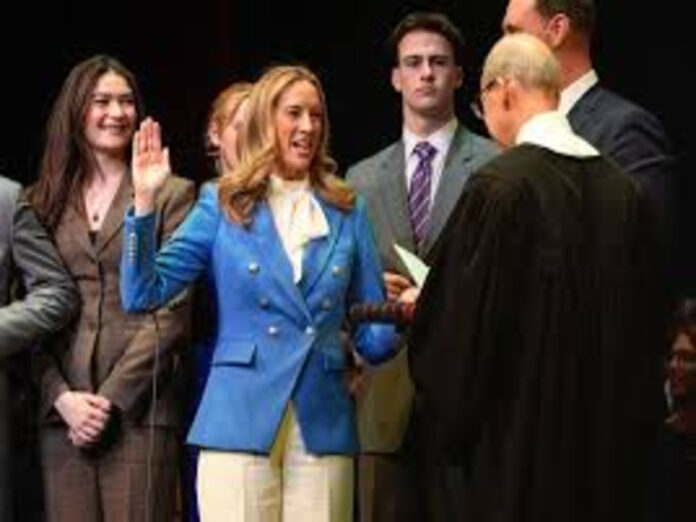
NEWARK, NJ.- Mikie Sherrill was sworn in today as New Jersey’s 57th Governor, making history as only the second woman to ever hold the office and the first Democratic woman elected governor in the state’s history.
The inauguration ceremony, held at the New Jersey Performing Arts Center, marked the formal transfer of power following Sherrill’s November victory. While the moment carried historic significance, her inaugural address quickly turned from unity to partisanship, raising early questions about the direction of her administration.

Rather than focusing primarily on outlining a detailed governing agenda, Sherrill devoted a substantial portion of her speech to attacking Donald Trump, blaming his economic and trade policies for rising costs facing New Jersey residents. The remarks drew applause from Democratic supporters but concern from critics who argue that New Jersey’s affordability crisis demands solutions, more than rhetoric.
Immediately following the ceremony, Governor Sherrill signed two executive orders that her administration says are aimed at addressing energy costs and long-term electricity supply:
- The first declares a utility cost emergency, freezing new electricity rate increases for New Jersey residents.
- The second directs state regulators to expand in-state energy production, with a focus on solar and nuclear electricity generation.
Administration officials described the actions as necessary to shield consumers from escalating costs while transitioning the state’s energy portfolio. However, energy experts note that rate freezes are typically temporary measures and do not address the underlying structural drivers of high utility prices.
Throughout her address, Sherrill repeatedly promised to “combat affordability” for families burdened by high taxes, housing costs, and energy bills. Yet she offered little specific detail on how her administration plans to reduce property taxes, rein in state spending, or meaningfully lower the cost of living beyond the initial executive actions.
Her lack of policy specificity comes as New Jersey residents continue to face some of the highest overall living costs in the nation, a problem that has persisted under years of uninterrupted Democratic control in Trenton.
Sherrill’s election victory last fall continued that dominance, giving Democrats control of both the executive and legislative branches. With one-party rule firmly in place, critics argue that the absence of meaningful opposition has contributed to rising costs and limited accountability.
Supporters praised Sherrill’s background as a former Navy helicopter pilot and federal prosecutor, expressing confidence that her leadership experience will translate into effective governance. Skeptics, however, caution that early reliance on partisan attacks and executive orders may signal more of the same from a state government long criticized for promising affordability while delivering higher costs.
As Governor Sherrill begins her term, New Jersey residents will be watching closely, not for speeches or symbolism, but for tangible results.
Editor’s Note:
Written by Jennifer Hodges, Political Editor, for Englebrook Independent News. All information in this article has been verified through contemporaneous reporting, official state statements, and publicly available records related to Governor Mikie Sherrill’s inauguration and executive actions on January 20, 2026. Englebrook Independent News remains committed to fact-based, evidence-supported journalism.