U.S. Naval Power Shifts Into The Middle East As Washington Warns Tehran Over Violence Against Demonstrators & Iran Signals Readiness To Retaliate
Monday, January 26, 2026, 11:30 A.M. ET. 5 Minute Read, By Jennifer Hodges, Political Editor: Englebrook Independent News,
WASHINGTON, DC.- The U.S. Navy’s USS Abraham Lincoln Carrier Strike Group has crossed into U.S. Central Command (CENTCOM) waters, a significant repositioning of American combat power into the Middle East region as Iran reels from a widening internal crisis, mounting international condemnation over the killing of protesters, and escalating warnings between Washington and Tehran.

A U.S. official confirmed that the strike group entered CENTCOM’s area of responsibility, placing the carrier and its escorts in closer range of potential contingencies tied to Iran and broader regional stability.
What Moved, And What It Carries;
According to U.S. defense officials, the strike group includes the aircraft carrier USS Abraham Lincoln (CVN-72) and three guided-missile destroyers, USS Frank E. Petersen, Jr., USS Spruance, and USS Michael Murphy, along with an embarked air wing that provides a wide menu of strike, surveillance, and electronic warfare capabilities.
The carrier is operating with aircraft that include F/A-18E/F Super Hornets, EA-18G Growlers, F-35C fighter jets, and MH-60R/S helicopters, assets designed to project power, defend the fleet, and support joint and coalition operations across the region.
Additional U.S. deployments to the broader theater have also been reported, including fighter aircraft rotations and airlift activity moving heavy equipment into forward locations.
Trump: “Massive Fleet… Just in Case;”
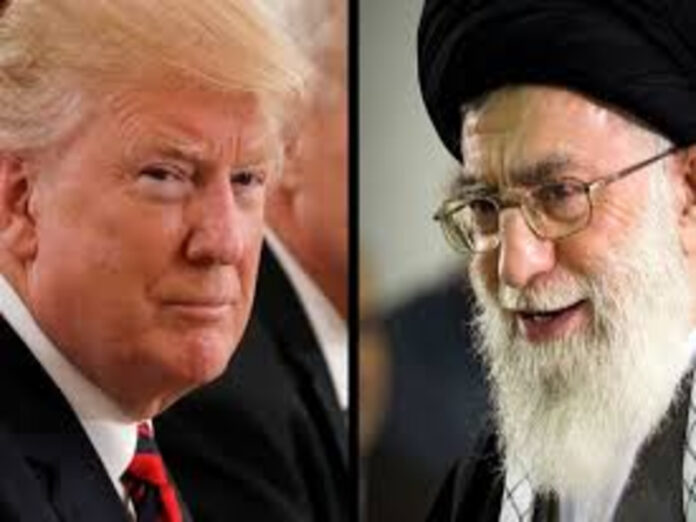
President Donald Trump described a “massive fleet” moving toward the Middle East, “just in case” action is required, while emphasizing that the United States may ultimately not need to employ it.
The posture signals deterrence, a traditional U.S. response when Washington seeks to communicate both capability and readiness without publicly committing to a specific operational course.
Iran’s Supreme Leader Reportedly Underground;
Multiple outlets have reported that Iran’s Supreme Leader, Ayatollah Ali Khamenei, has moved underground or into a fortified location amid fears of U.S. military action and escalating domestic unrest.
Independent verification of a head of state’s precise location is inherently difficult, particularly amid Iran’s internet blackouts and state-controlled media environment. However, the broader reporting consensus indicates that Iran’s senior leadership has sharply increased security measures and is operating under elevated threat perceptions.
Protest Crackdown Fuels Escalation;
The carrier movement comes as Iran faces intensifying international scrutiny over its violent suppression of nationwide protests.
The United Nations Human Rights Council recently condemned what it described as Iran’s “brutal repression” of demonstrators and authorized a formal investigation to document alleged abuses tied to the latest crackdown. Casualty figures remain disputed, with Iranian authorities providing one tally while human-rights organizations cite significantly higher numbers.
Amnesty International has reported mass arrests, militarized deployments, and intimidation of victims’ families, patterns consistent with previous protest crackdowns inside the Islamic Republic.
Tehran Warns Of Retaliation;
Iran’s military leadership has responded to U.S. movements with pointed warnings.
The commander of Iran’s Islamic Revolutionary Guard Corps stated that Iranian forces were “finger on the trigger,” language intended to signal heightened readiness and deterrence. Tehran has paired those warnings with accusations that the United States and Israel are responsible for fueling unrest, a narrative frequently used during past internal crises.
Khamenei: No War, But “Criminals” Will Be Punished;
In public remarks carried by international outlets, Khamenei sought to project restraint while warning of consequences.
“We will not drag the country into war,” he said, “but we will not let domestic or international criminals go unpunished.”
The formulation reflects a familiar Iranian strategic posture: threatening retaliation while attempting to avoid a direct confrontation with U.S. naval and air power now positioned closer to Iranian territory.
Clarifying U.S. Military Action;
While U.S. forces have conducted strikes linked to Iran in recent months, current verified reporting surrounding the USS Abraham Lincoln’s movement characterizes the action as a deterrent reinforcement rather than confirmation of a newly launched U.S. strike at the time of the carrier’s entry into CENTCOM waters.
Defense officials have emphasized operational flexibility and regional stability as primary objectives of the deployment.
Why The Carrier Matters;
A carrier strike group functions as a mobile airbase and command platform capable of rapidly expanding U.S. military options. Its presence serves three principal purposes:
- Deterrence: Signaling the ability to respond immediately to threats against U.S. forces or allies.
- Contingency Response: Providing strike, surveillance, and air-defense capabilities should hostilities expand.
- Regional Reassurance: Demonstrating U.S. commitment to stability for partners monitoring Iran’s internal collapse and regional ripple effects.
At the same time, the deployment increases the risk of miscalculation, particularly in an environment shaped by asymmetric threats such as drones and missile saturation tactics.
What Happens Next;
Three developments will determine whether the crisis escalates or stabilizes:
Iran’s internal trajectory, whether protests expand, and whether repression intensifies further.
U.S. red lines, whether Washington shifts from deterrence to direct action if killings rise or U.S. assets are threatened.
Miscalculation risk, as both sides emphasize readiness, the margin for error narrows in contested maritime and airspace environments.
For now, the arrival of the USS Abraham Lincoln Carrier Strike Group into CENTCOM waters marks a clear signal: the United States is positioning for a rapid response as Iran’s domestic upheaval collides with regional security concerns.
Editor’s Note:
This article was written by Jennifer Hodeges, Political Editor, and is based on contemporaneous reporting from U.S. defense officials and internationally recognized news and human-rights organizations. Claims regarding the Supreme Leader of Iran’s precise location are widely reported but cannot be independently verified in real time due to Iran’s security environment and information restrictions. Englebrook Independent News characterizes such claims as reported, not confirmed, in keeping with its commitment to fact-based, evidence-supported journalism.