Israeli Leader Moved Up Washington Visit Amid Renewed U.S.-Iran Diplomacy And Rising Regional Threats
Monday, February 9, 2026, 3:45 P.M. ET. 4 Minute Read, By Jennifer Hodges, Political Editor: Englebrook Independent News,
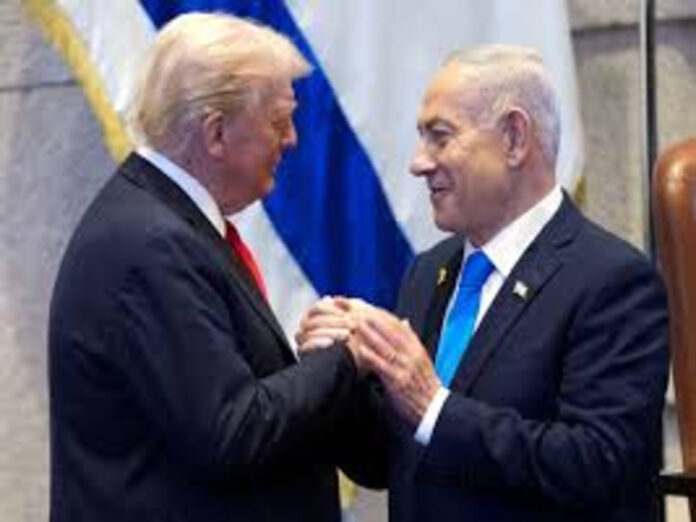
WASHINGTON, DC.- Israeli Prime Minister Benjamin Netanyahu is scheduled to meet President Donald Trump at the White House on Wednesday, February 11, 2026, as the United States pursues renewed negotiations with Iran over its nuclear program, talks that Israel says must also address Tehran’s ballistic missile arsenal and its support for regional militant groups.
The meeting was originally expected to take place on February 18, 2026, but was moved up amid the latest phase of U.S.-Iran engagement, according to Netanyahu’s office and international wire reporting. The White House did not immediately provide public details on the revised schedule or the full scope of the agenda.

Focus On Iran’s Nuclear Program And Regional Influence;
According to a statement from Netanyahu’s office, the Israeli prime minister intends to press U.S. officials to ensure that any negotiations with Iran include firm limits on ballistic missile development and the dismantling of Tehran’s support network for armed proxy groups operating across the Middle East.
Israeli officials have long argued that Iran’s nuclear ambitions cannot be separated from its regional activities, including backing for Hezbollah in Lebanon and Hamas in Gaza, groups Israel considers direct security threats.
Those demands, however, highlight growing differences between Israeli priorities and Iran’s stated red lines in the current diplomatic effort.
U.S.-Iran Talks Reveal Sharp Divisions;
During the most recent round of indirect talks held on Friday, February 6, 2026, in Muscat, Oman, Iranian officials reaffirmed their insistence on retaining what they describe as a “right to enrich uranium,” according to diplomats briefed on the discussions.
Iranian representatives also made clear that missile capabilities were not on the table, reiterating long-standing positions that its ballistic missile program is strictly defensive in nature. Iranian officials have publicly rejected any attempt to broaden negotiations beyond nuclear issues.
Despite those divisions, both Washington and Tehran described the Muscat talks as constructive, with additional discussions expected in the coming days.
President Trump characterized the talks as “very good” and said the administration believes further engagement could help reduce the risk of direct confrontation.
Warning Signals From Tehran;
Iran’s foreign minister, Abbas Araghchi, warned that diplomacy must proceed without threats, while also signaling that Iran would respond forcefully to any military action.
In public remarks following the Muscat talks, Araghchi stated that if the United States were to attack Iran, Tehran would retaliate by striking U.S. military bases across the region, a warning that underscores the fragile nature of the current diplomatic moment.
Escalating Regional Tensions;
The Netanyahu-Trump meeting comes as tensions remain elevated across the Middle East, with regional governments increasingly concerned that miscalculation could spark a wider conflict.
Gulf Arab states, in particular, have expressed anxiety that renewed fighting could destabilize energy markets and regional security, especially following last year’s conflict that saw direct military engagement between U.S. and Iranian-linked forces.
International reporting has noted that in June of last year, the United States joined an Israeli military campaign targeting Iranian uranium enrichment facilities and other nuclear-related sites. Iran later responded with a missile attack on a U.S. military base in Qatar, sharply escalating regional hostilities.
A Compressed Diplomatic Timeline;
Wednesday’s White House meeting is expected to focus on whether Washington’s diplomatic approach can be aligned with Israel’s security demands, particularly on uranium enrichment limits, missile restrictions, and Iran’s support for armed groups, without triggering the broader regional escalation U.S. officials say they are trying to avoid.
With the next round of U.S.-Iran negotiations expected soon, the outcome of Netanyahu’s talks with President Trump could play a decisive role in shaping the direction and scope of future diplomacy.
Editor’s Note:
This article was written by Jennifer Hodges, Political Editor, and is based on verified public statements and reporting published between February 7 and February 9, 2026, including international wire service coverage detailing the White House meeting schedule, the status of U.S.-Iran negotiations, and comments from senior Israeli, U.S., and Iranian officials. Englebrook Independent News reports only confirmed, fact-based information and will continue to update this story as developments warrant.