U.S. Military Action Neutralizes Cartel-Operated Drones Violating American Airspace As Federal Authorities Reinforce Border Security
Wednesday, February 11, 2026, 1:15 P.M. ET. 5 Minute Read, By Jennifer Hodges, Political Editor: Englebrook Independent News,
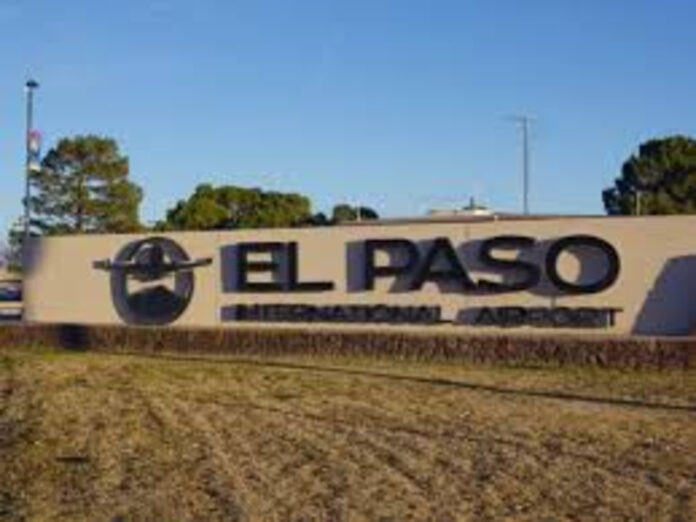
WASHINGTON, DC.- The Federal Aviation Administration (FAA) reopened airspace over El Paso International Airport early Wednesday after a sudden and unprecedented shutdown triggered by a Mexican drug cartel drone incursion into U.S. sovereign airspace, according to federal officials.
The temporary flight restriction, initially set to last up to ten days, was imposed after cartel-operated drones were detected crossing into U.S. airspace near El Paso, forcing immediate intervention by U.S. military and aviation authorities to protect civilian aircraft, airport infrastructure, and the surrounding population.

Federal officials later confirmed the threat had been neutralized, allowing commercial flights to resume.
Cartel Drones Cross U.S. Border, Forcing Military Response;
According to senior U.S. officials, the FAA acted after intelligence and radar systems detected unmanned aerial vehicles linked to Mexican drug cartels operating dangerously close to civilian flight paths. The drones, which officials described as part of increasingly aggressive cartel tactics, represented a direct threat to aviation safety and national security.
U.S. military forces were authorized to intercept and disable the drones after they violated restricted U.S. airspace. While operational details remain classified, officials said the response was decisive and successful.
The incident marks one of the clearest examples to date of cartel activity escalating beyond smuggling and surveillance into direct interference with U.S. critical infrastructure.
Major Airport Grounded To Protect Civilians;
The FAA’s emergency action effectively grounded all commercial air traffic in and out of El Paso, disrupting flights across the Southwest and impacting thousands of travelers. The move underscored the seriousness of the threat posed by cartel drone operations near civilian aviation corridors.
El Paso sits adjacent to one of the most active cartel trafficking zones along the southern border. The presence of cartel drones near a major U.S. airport raised immediate alarms among aviation and defense officials tasked with preventing a catastrophic incident.
Cartel Technology Driving New Security Risks;
Drug cartels have increasingly adopted military-style technology, including long-range drones capable of surveillance, payload delivery, and coordinated flight operations. Federal reporting shows tens of thousands of drone detections along the southern border in recent years, a figure that highlights how organized crime groups are evolving faster than traditional enforcement models.
The El Paso incident demonstrates how cartels are no longer confined to the ground and how their tactics now threaten commercial aviation, public safety, and U.S. sovereignty.
Federal Agencies Close Ranks, Restore Airspace;
Transportation Secretary Sean Duffy said the FAA worked in close coordination with the Department of War and other federal agencies to ensure the threat was eliminated before lifting the restriction.
While some reporting referenced nearby military testing activity, federal officials emphasized that the immediate cause of the shutdown was cartel-linked drone activity, not routine military exercises. The restriction was lifted only after authorities confirmed the airspace was secure.
Mexico Denies Knowledge As U.S. Presses Forward;
Mexican President Claudia Sheinbaum said her government had no immediate information confirming the incident. U.S. officials, however, made clear that the drones violated American airspace and were handled as a criminal-national security threat, independent of Mexico’s internal response.
The lack of acknowledgment from Mexican authorities has intensified pressure on bilateral security coordination, particularly as cartel operations increasingly spill across the border.
Troop Deployments And Border Posture;
While federal officials have not publicly confirmed that 200 additional U.S. troops were deployed specifically in response to the El Paso incident, the shutdown occurred amid a broader strengthening of U.S. military and federal presence along the southern border.
Defense officials have expanded designated national defense areas and increased counter-drone capabilities as cartel tactics grow more sophisticated.
Lawmakers Demand Accountability And Answers;
Members of Congress representing border districts are now demanding detailed briefings on:
- How cartel drones penetrated U.S. airspace near a major airport
- Whether existing counter-drone defenses were sufficient
- How civilian aviation can be better protected from cartel threats
- What long-term measures are being taken to prevent repeat incidents
The El Paso shutdown has become a flashpoint in the broader debate over whether drug cartels should be treated not merely as criminal enterprises, but as hostile actors employing asymmetric warfare tactics against the United States.
A Warning Shot Across The Border;
Flights have resumed at El Paso International Airport, but the message from federal authorities was unmistakable: cartel incursions into U.S. airspace will be met with forceful response.
The incident stands as a stark warning that cartel activity is no longer limited to tunnels, vehicles, or border crossings, but now reaches into the skies above American cities.
Editor’s Note:
This report was written by Jennifer Hodges, Political Editor, and is based on contemporaneous national and wire reporting regarding the FAA’s emergency flight restriction over El Paso and subsequent statements from U.S. federal officials. As of publication, detailed technical data on the drones involved and the precise interception methods remain classified.
Englebrook Independent News characterizes the incident as cartel-linked based on federal attributions and emphasizes that responsibility rests with transnational criminal organizations, not civilians or the Mexican population at large. Claims regarding the deployment of additional U.S. troops specific to this incident could not be independently confirmed at the time of publication.