Dow Futures Sink And Crude Surges As Iran Warns Shipping May Be Halted; Analysts See A Fast Path To $90 Oil If Disruption Persists
Monday, March 2, 2026, 10:30 A.M. ET. 5 Minute Read, By Haylee Ficuciello, Economy & Finance Editor: Englebrook Independent News,
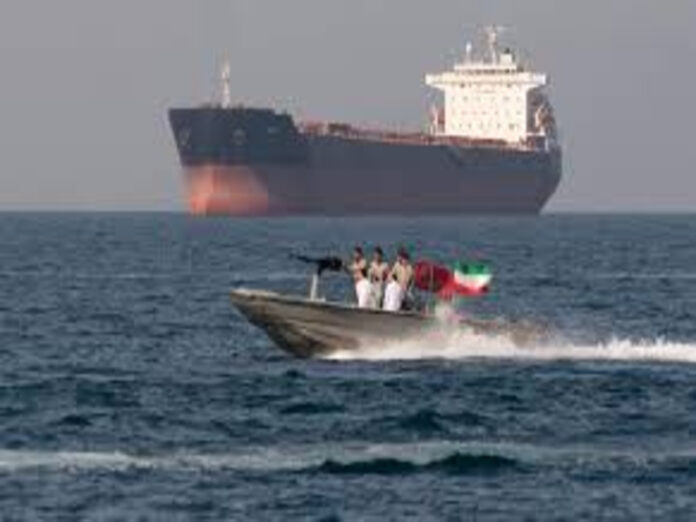
MORRISTOWN, NJ.- Oil prices surged, and equity markets sold off Monday as investors reacted to rapidly escalating hostilities involving the United States, Israel, and Iran, and to intensifying fears that the Strait of Hormuz could be effectively shut to commercial shipping, choking one of the world’s most critical energy arteries.
In early Monday trading, benchmark crude prices jumped sharply following a weekend of strikes and counterstrikes that raised the probability of prolonged disruption to Middle East supply chains. U.S. benchmark crude rose more than 8% to roughly the low-$70s per barrel, while Brent crude climbed about 9% toward the high-$70s, according to market data reported by Reuters and Associated Press.

At the same time, U.S. stock futures pointed lower, with futures tied to the Dow Jones Industrial Average down roughly 1% or more in premarket trading as investors priced in higher energy costs, renewed inflation pressure, and mounting geopolitical uncertainty.
The Strait Of Hormuz: A Global Energy Flashpoint;
The Strait of Hormuz, a narrow maritime corridor connecting the Persian Gulf to open ocean shipping lanes, serves as a primary transit route for a substantial share of the world’s internationally traded oil. Even the credible threat of a closure can send shockwaves through energy markets.
Recent maritime advisories and international reporting describe increased risk to commercial tankers operating near the strait. Shipping firms and insurers have reportedly grown more cautious, and some operators have reconsidered transits through the area amid heightened military activity and direct warnings.
Reuters reported that Iran’s Revolutionary Guards informed ships that passage through the strait was “not allowed,” according to an official connected to a European Union naval mission. Markets interpreted the language as a significant escalation, even as the durability and enforceability of any blockade remain uncertain.
A Rapidly Expanding “War-Risk Premium;”
The market’s sharp reaction reflects both immediate supply concerns and a rapidly expanding “war-risk premium,” the additional cost embedded in crude prices to hedge against the possibility of severe disruption.
Reports describe shipping interruptions, tanker damage, and operational instability affecting regional logistics. While some analysts characterized the initial price jump as measured relative to worst-case scenarios, the underlying driver remains clear: any sustained interference with flows through Hormuz would materially affect global supply.
The Associated Press noted that traders are reacting not only to physical damage risks but also to the cascading financial implications of higher freight rates, surging insurance costs, and delivery schedule delays.
Why Analysts Are Talking About $90 Oil;
Several market analysts have identified $90 per barrel as a near-term risk threshold should meaningful disruption occur, whether through a formal closure, effective interdiction of shipping, or sustained escalation that deters carriers from entering the region.
According to reporting by the Associated Press, analysts warned that oil could exceed $90 per barrel if the Strait of Hormuz is effectively closed or if additional infrastructure damage occurs. Reuters similarly cited forecasts projecting prices above $90 under extended disruption scenarios.
It is important to distinguish between baseline forecasts and contingency pricing. The U.S. Energy Information Administration has previously projected significantly lower average crude prices for 2026 under stable conditions, underscoring how much of the current spike reflects geopolitical risk rather than underlying supply-demand fundamentals.
Equity Markets React To Inflation Fears;
The selloff in U.S. equity futures reflects a familiar economic pattern: higher oil prices increase production and transportation costs across multiple sectors, potentially reigniting inflationary pressures.
Industries particularly sensitive to fuel prices, including airlines, logistics firms, chemical manufacturers, and consumer discretionary companies, face immediate cost headwinds. Investors also remain wary that sustained energy inflation could complicate monetary policy decisions and delay potential interest-rate relief.
What Investors And Policymakers Are Watching;
Market participants are closely monitoring several key developments:
- Shipping activity through Hormuz: Whether warnings translate into sustained enforcement or widespread avoidance by commercial carriers.
- Infrastructure assessments: The extent of any confirmed damage to tankers, export terminals, and refineries.
- Insurance and freight rates: Rising premiums could effectively constrain supply even without a formal blockade.
- Diplomatic and military responses: Any de-escalation could quickly ease prices; further escalation could accelerate the climb toward the $90 threshold.
In short, markets are pricing in slower growth and tighter financial conditions if crude remains elevated.
The Bottom Line;
For now, oil markets are reacting to one central reality: the world’s most sensitive energy chokepoint is under acute threat. Equity markets, in turn, are responding to the economic consequences of sustained high energy costs.
If crude prices continue climbing toward $90 per barrel, U.S. consumers could see renewed increases at the gasoline pump, while businesses absorb higher operating expenses. Conversely, any meaningful easing of tensions could remove part of the war-risk premium just as quickly as it appeared.
In wartime markets, volatility, not stability, becomes the baseline expectation.
Editor’s Note:
This article was written by Haylee Ficuciello, Economy & Finance Editor, and is based on contemporaneous financial reporting and verified market data from Reuters, The Associated Press, and other major financial news sources. Price movements referenced reflect intraday or premarket trading snapshots and may differ from official closing settlements. References to potential $90-per-barrel oil reflect analyst scenario modeling tied to possible disruption in the Strait of Hormuz and do not constitute a guaranteed or baseline forecast.