Congressional Resolution Highlights Broad Bipartisan Agreement On Iran While Exposing Internal Democratic Divisions
Saturday, March 7, 2026, 6:45 A.M. RT. 2 Minute Read, By Jennifer Hodges, Political Editor: Englebrook Independent News,
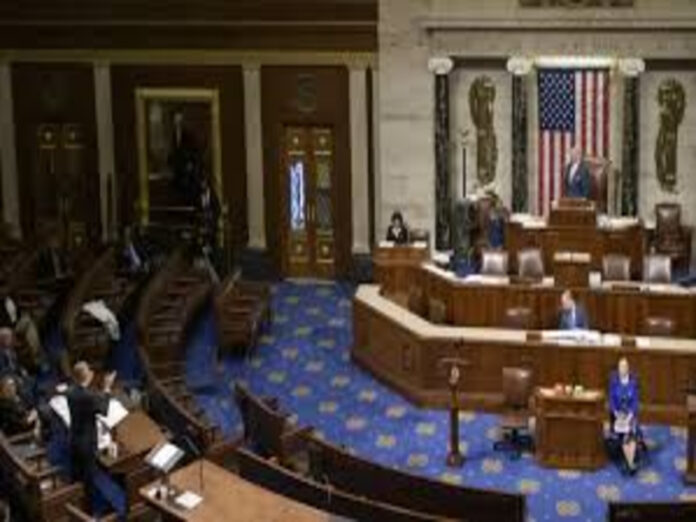
WASHINGTON, DC.- The House vote reaffirming Iran’s status as the world’s leading state sponsor of terrorism was decisive, but the debate surrounding it revealed deeper political tensions within Congress.
Here are five key takeaways from the vote and what they reveal about U.S. foreign policy and domestic politics.

1. Congress Remains Overwhelmingly Unified On Iran;
Despite the controversy surrounding the opposition votes, the final 372–53 vote margin underscores that Congress continues to view Iran as a major national security threat.
Iran’s designation as a State Sponsor of Terrorism since 1984 reflects decades of U.S. policy aimed at countering Tehran’s support for militant groups and proxy forces across the Middle East.
2. The Resolution Is Symbolic, But Politically Significant;
House Resolution 1099 does not impose new sanctions or change existing law.
Instead, it serves as a formal reaffirmation of U.S. policy, signaling congressional consensus about Iran’s role in supporting militant organizations.
Symbolic votes, however, often carry political weight because they place lawmakers on record regarding sensitive national security issues.
3. Democratic Opposition Reflects Ideological Divisions;
The 53 Democratic votes against the resolution reflect a growing divide within the party over foreign policy.
Many members who opposed the measure are associated with the progressive wing of the Democratic Party, which has pushed for reduced military engagement abroad and increased diplomatic efforts with adversarial governments.
The vote highlights an ongoing debate within the party about how aggressively the United States should confront geopolitical rivals.
4. The Vote Comes Amid Rising Regional Tensions;
The House vote took place amid escalating tensions between the United States and Iran.
Key flashpoints include:
- Iran’s continued nuclear enrichment activities
- U.S. economic sanctions targeting Iranian entities
- Iranian warnings of retaliation against U.S. military bases in the Middle East
In that context, the resolution took on heightened significance as a statement of congressional policy.
5. The Roll Call Vote May Become A Political Flashpoint;
Votes tied to national security issues frequently become campaign issues.
Political strategists say the list of lawmakers who opposed the resolution will likely appear in future political messaging as the 2026 election cycle approaches.
As a result, what began as a symbolic resolution may ultimately have lasting political ramifications.
Editor’s Note:
House Resolution 1099 expresses the sense of Congress that Iran remains the world’s leading state sponsor of terrorism. The resolution does not alter existing sanctions or the State Department’s official designation of Iran, which has remained in place since 1984.
Support Independent Journalism
Englebrook Independent News is powered by readers like you. Your donation helps us continue delivering trusted local, national, and political news — free for everyone.
Donate Today