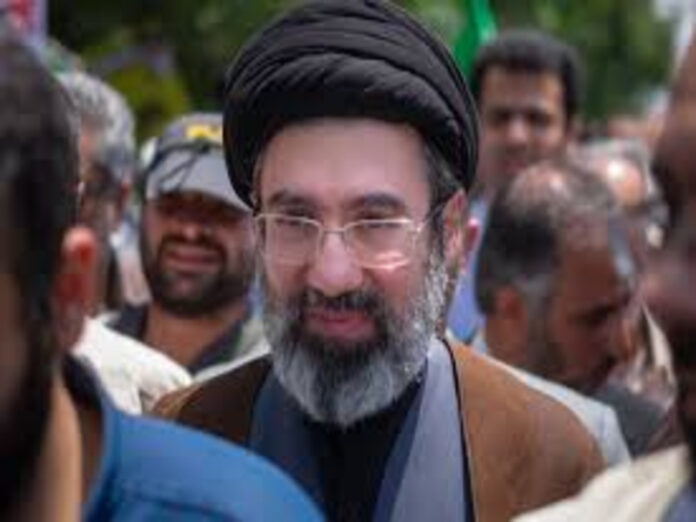
Mojtaba Khamenei Elevated After Death Of His Father In U.S.–Israeli Strikes, Cementing Hard-Line Rule & Raising Fears Of Deeper Repression & Prolonged War
Sunday, March 8, 2026, 8:00 P.M. ET. 6 Minute Read, By Jennifer Hodges, Political Editor: Englebrook Independent News,
TEHRAN, IR.- Iran’s ruling clerical establishment has installed Mojtaba Khamenei, the son of the late Supreme Leader Ayatollah Ali Khamenei, as the Islamic Republic’s new supreme leader, according to Iranian state media, marking a controversial and highly consequential transfer of power within one of the world’s most authoritarian political systems.

The decision by the country’s powerful Assembly of Experts comes just days after Ayatollah Ali Khamenei, who dominated Iran’s political and religious life for nearly four decades, was killed during a series of U.S.- and Israeli-backed airstrikes targeting senior leadership figures during the rapidly escalating 2026 conflict.
The appointment places Mojtaba Khamenei, long viewed as a shadowy power broker within the regime, at the helm of a government already facing war abroad, mounting unrest at home, and growing international isolation.
At age 56, he now assumes sweeping authority over Iran’s political system, its armed forces, intelligence services, and its controversial nuclear program.
The Killing Of Iran’s Longtime Ruler;
Ali Khamenei, Iran’s second supreme leader since the 1979 Islamic Revolution, was killed on February 28, 2026, when a coordinated wave of airstrikes targeted senior Iranian leadership locations in Tehran.
The strikes, reportedly conducted with Israeli military assets and U.S. intelligence support, were aimed at dismantling Iran’s command structure amid escalating hostilities.
Satellite imagery and regional intelligence assessments later indicated heavy damage at a compound believed to have been hosting a high-level meeting of Iranian officials.
Iranian state media confirmed Khamenei’s death the following day, triggering a period of official mourning across the country.
The Iranian government declared a 40-day national mourning period, even as tensions with Israel and the United States continued to intensify across the region.
Assembly Of Experts Moves Quickly;
Under Iran’s constitution, the 88-member Assembly of Experts, a body of senior clerics, holds the authority to appoint or remove the supreme leader.
Following Khamenei’s death, a temporary leadership council briefly assumed control of the state while the assembly convened behind closed doors to determine a successor.
Within days, the clerical body announced that Mojtaba Khamenei had secured the votes necessary to assume the position of supreme leader.
The rapid decision effectively keeps power within the same ruling circle that has dominated Iran since the Islamic Revolution.
Iran’s parliament speaker, Mohammad Bagher Ghalibaf, publicly endorsed the appointment, urging loyalty to the new leader and calling unity around the regime “a national duty.”
Critics See Dynastic Power Grab;
The selection of Mojtaba Khamenei has sparked widespread criticism among analysts and Iranian dissidents, many of whom view the move as a form of dynastic succession.
The Islamic Republic was founded on revolutionary ideals that rejected monarchy and hereditary rule.
Yet the elevation of the former leader’s son has fueled accusations that the ruling clerical elite is consolidating power in a manner increasingly resembling the dynasties the revolution once opposed.
Mojtaba Khamenei is considered only a mid-ranking Shiite cleric and has never held elected office or a formal government post.
Despite this, he has long been viewed as an influential behind-the-scenes operator within the regime.
Observers say his rise was made possible largely through deep alliances with the Islamic Revolutionary Guard Corps (IRGC)—the powerful military and political force widely viewed as the backbone of the Iranian regime.
Key figures reportedly aligned with Mojtaba Khamenei include:
- Ahmad Vahidi, senior IRGC leadership figure
- Hossein Taeb, former head of IRGC intelligence
- Mohammad Bagher Ghalibaf, Speaker of Parliament
These networks helped solidify elite support for his leadership despite objections from some clerical factions wary of hereditary rule.
Trump Blasts New Leader;
President Donald Trump responded sharply to the announcement, criticizing the selection of Mojtaba Khamenei and suggesting the leadership transition would do little to reduce tensions.
Trump reportedly described Iran’s new supreme leader as a “lightweight” and warned that the appointment would not change Washington’s strategic posture toward Tehran.

In previous comments regarding Iran’s leadership transition, Trump argued the United States must play a role in shaping the country’s future leadership to prevent further nuclear escalation and regional instability.
American officials have suggested the appointment signals Iran’s leadership intends to maintain a confrontational stance rather than pursue meaningful negotiations.
Israel Signals Successor Could Be A Target;
Israeli officials have also issued stark warnings regarding Iran’s new leadership.
Following the killing of Ali Khamenei, Israel’s defense leadership stated that any successor to the Iranian supreme leader could be considered a legitimate military target if Iran continues hostilities.
The warning underscores the precarious position Mojtaba Khamenei now faces as he attempts to consolidate power during wartime.
Hard-Line Rule Expected;
Analysts widely expect Mojtaba Khamenei’s leadership to continue, and potentially intensify, the hard-line policies associated with his father’s rule.
Experts say he has historically supported:
- A confrontational approach toward the United States
- Expanded support for Iranian proxy militias across the Middle East
- Resistance to Western pressure regarding Iran’s nuclear ambitions
Many regional observers also warn that Iran could see tighter domestic repression as the new leadership attempts to maintain control amid economic crisis and public dissatisfaction.
Reports suggest Iran’s ruling elite may empower the Revolutionary Guards even further to suppress dissent and stabilize the regime.
Just How Long Will Mojtaba Khamenei Last?
Despite the formal announcement of his leadership, many geopolitical analysts remain skeptical about how long Mojtaba Khamenei will remain in power.
Several factors threaten the durability of his rule.
Ongoing War
Iran remains engaged in a widening conflict with Israel and the United States that has already destabilized much of the region.
Internal Elite Divisions
The controversial nature of hereditary succession has created friction within Iran’s clerical establishment.
Security Risks
Israeli officials have openly suggested Iran’s leadership could remain military targets.
Economic Crisis
Iran continues to grapple with sanctions, inflation, currency collapse, and public unrest.
Some analysts warn that the death of Ali Khamenei and the controversial elevation of his son may represent one of the most fragile moments for Iran’s political system since the Islamic Revolution.
Whether Mojtaba Khamenei can consolidate long-term authority or become a short-lived wartime leader may depend largely on the trajectory of the conflict and the stability of Iran’s ruling institutions.
Editor’s Note:
This report was written by Jennifer Hodges, Political Editor, and is based on statements from Iranian state media, international news agencies, and publicly available reporting regarding the death of Ayatollah Ali Khamenei and the appointment of Mojtaba Khamenei as Iran’s new supreme leader. Due to the rapidly evolving military confrontation involving Iran, Israel, and the United States, details surrounding the leadership transition and broader geopolitical developments may continue to change as new information becomes available.
Support Independent Journalism
Englebrook Independent News is powered by readers like you. Your donation helps us continue delivering trusted local, national, and political news — free for everyone.
Donate Today
