
51–48 Procedural Vote Opens Contentious Floor Debate As GOP Divisions Emerge
Tuesday, March 17, 2026, 10:15 P.M. ET. 4 Minute Read, By Jennifer Hodges, Political Editor: Englebrook Independent News,
WASHINGTON, DC.- The United States Senate on Tuesday narrowly approved a 51–48 procedural vote to advance the SAVE America Act, formally opening debate on one of the most contentious election-related proposals in recent years and exposing early fractures within the Republican conference.
The vote, which clears a key procedural hurdle known as a “motion to proceed,” allows the legislation to be formally considered on the Senate floor but does not guarantee its eventual passage.
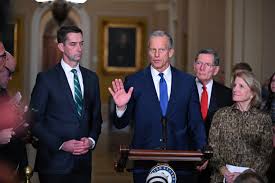
According to multiple reports, Sen. Lisa Murkowski (R-Alaska) joined Democrats in opposing the motion.
In addition, Sen. Susan Collins (R-Maine) has been identified among moderate Republicans expressing opposition or concerns surrounding similar procedural efforts and voting restrictions, aligning with Democrats in resistance to advancing comparable legislation.
A Narrow Vote With Immediate Political Implications;
The 51–48 outcome underscores the razor-thin margin Republicans hold in the Senate and highlights internal disagreements over how aggressively to pursue federal election reforms.
Senate Majority Leader John Thune (R-S.D.) moved to bring the House-passed measure to the floor, initiating what is expected to be an extended, highly visible debate.
While Republicans broadly support the bill’s objectives, dissent from within their own ranks signals unease about both the substance of the legislation and the political risks associated with it.
What The SAVE America Act Proposes;
The SAVE America Act, also referred to as the Safeguard American Voter Eligibility Act, represents a sweeping effort to reshape federal election standards.
Key provisions include:
- Mandatory proof of U.S. citizenship for voter registration
- Stricter voter identification requirements at polling places
- Expanded federal oversight of state voter rolls
- New penalties for election officials who register individuals without sufficient documentation
- Potential restrictions on mail-in voting, a particularly controversial addition backed by former President Donald Trump
Supporters argue the bill is necessary to ensure election integrity, despite a lack of widespread evidence demonstrating systemic voter fraud at the scale suggested by proponents.
Opponents, including all Senate Democrats, contend the measure could disenfranchise millions of eligible voters, particularly minorities, low-income individuals, and elderly Americans.
What We Know So Far;
- The Senate has formally opened debate, but the bill faces steep procedural obstacles ahead.
- Republicans hold 53 seats, far short of the 60 votes typically required to overcome a filibuster and advance most legislation.
- All Democrats and allied independents are unified in opposition, making bipartisan support unlikely.
- Internal GOP divisions, evidenced by defections from Murkowski and concerns from moderates, further complicate the path forward.
Importantly, the current phase is largely symbolic and strategic, allowing Republicans to frame the national conversation on election security while forcing Democrats to publicly oppose the measure.
What Comes Next;
The Senate now enters what leadership has described as an “open-ended” debate period, potentially lasting several days or longer.
During this phase:
- Senators may introduce amendments, potentially reshaping or softening elements of the bill
- Floor speeches and procedural maneuvers will dominate proceedings, with both parties using the platform to appeal to voters ahead of upcoming elections
- Ultimately, the bill will face a cloture vote, requiring 60 votes to proceed to final passage
Given current vote counts, analysts widely expect the legislation to fall short of the necessary threshold, barring a significant and unlikely shift in support.
Political Stakes And Broader Context;
The SAVE America Act has become a central priority for Republican leadership and former President Donald Trump, who has pushed aggressively for its passage ahead of the next federal election cycle.
For Republicans, the debate offers an opportunity to:
- Emphasize concerns about election security and voter fraud
- Rally their political base
- Place Democrats on record opposing stricter voting requirements
For Democrats, the bill represents what they describe as a direct challenge to voting access and democratic participation, framing the debate as a fundamental fight over the future of U.S. elections.
Editor’s Note:
This article was written by Jennifer Hodges, Political Editor, and is based on verified reporting from multiple sources, including congressional reporting and real-time coverage of Senate proceedings as of March 17, 2026. Vote totals, legislative provisions, and procedural details reflect the most current available information at the time of publication. As the Senate debate continues, amendments or procedural developments may alter the bill’s trajectory.
Support Independent Journalism
Englebrook Independent News is powered by readers like you. Your donation helps us continue delivering trusted local, national, and political news — free for everyone.
Donate Today