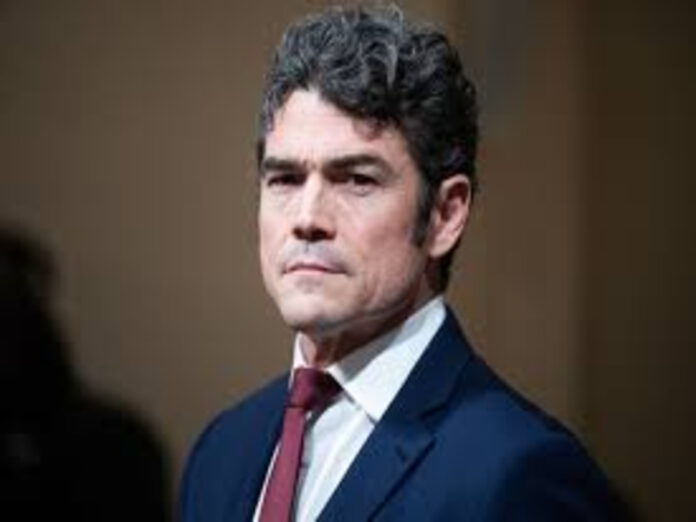
Joe Kent Cites Lack Of Imminent Threat & Political Pressure As Reasons For Departure, Raising Concerns Inside National Security Ranks
Tuesday, March 17, 2026, 10:40 P.M. ET. 4 Minute Read, By Jennifer Hodges, Political Editor: Englebrook Independent News,
WASHINGTON, DC.- In a stunning development that has sent ripples through the U.S. national security establishment, Joe Kent, Director of the National Counterterrorism Center (NCTC), announced his resignation on Tuesday, citing deep opposition to the United States’ ongoing military conflict with Iran.

Kent, widely regarded as one of the federal government’s most senior counterterrorism authorities, made his decision public in a statement posted to the social media platform X.
“After much reflection, I have decided to resign from my position as Director of the National Counterterrorism Center, effective today,” Kent wrote. “I cannot in good conscience support the ongoing war in Iran. Iran posed no imminent threat to our nation, and it is clear that we started this war due to pressure from Israel and its powerful American lobby.”
A Rare Public Break Within Intelligence Leadership;
Kent’s resignation marks one of the most high-profile public dissent actions by a sitting U.S. intelligence official in recent history. Directors of agencies such as the NCTC typically operate with strict adherence to executive branch policy and rarely express disagreement publicly.
The NCTC, established in 2004 following recommendations from the 9/11 Commission, serves as a central hub for analyzing and integrating intelligence related to terrorism threats. As director, Kent would have had access to highly sensitive intelligence assessments.
His assertion that Iran posed “no imminent threat” stands in contrast to public justifications offered by administration officials, who have described military actions as necessary to address evolving threats to U.S. interests and regional stability.
Administration Response;
Speaking Tuesday during a White House appearance alongside the Prime Minister of Ireland, Donald Trump addressed Kent’s resignation on camera, acknowledging the departure while defending the administration’s broader national security posture.
Trump indicated that decisions regarding Iran were based on intelligence assessments and strategic considerations, and signaled continued confidence in the administration’s approach to the conflict.
Separately, Tulsi Gabbard was briefed on Kent’s resignation. As Director of National Intelligence, Gabbard oversees coordination across the intelligence community. Officials indicated that intelligence operations and threat monitoring related to Iran remain ongoing and unchanged following Kent’s departure.
No full official transcript of Trump’s remarks or a formal written statement from Gabbard had been released at the time of publication.
Questions Over Intelligence Justification;
Kent’s statement raises significant questions regarding the intelligence basis for the U.S. decision to enter into open conflict with Iran.
While administration officials have referenced classified intelligence to support their position, detailed evidence outlining an imminent threat has not been publicly released. Kent’s remarks suggest there may be differing interpretations within the national security apparatus regarding both the immediacy and scale of the threat environment.
Given Kent’s role and access to intelligence, his public dissent is likely to intensify scrutiny over how intelligence assessments are being interpreted and communicated to policymakers and the public.
Political Implications And Congressional Reaction;
Kent’s claim that the war was influenced by pressure from Israel and its American lobbying network is expected to generate significant political debate in Washington.
Lawmakers have increasingly called for greater transparency surrounding the legal authority and intelligence justification for the conflict. The resignation is likely to add urgency to those calls, particularly as Congress evaluates its oversight role in matters of war powers and national security decision-making.
The situation also raises broader questions about the extent to which geopolitical alliances and external influences shape U.S. military policy.
Strategic And Global Ramifications;
Kent’s departure comes at a time of heightened geopolitical tension in the Middle East, where U.S. forces remain engaged in operations linked to the conflict with Iran.
Public dissent at the highest levels of the intelligence community has the potential to impact both domestic confidence and international perceptions of U.S. strategic cohesion.
Allied nations may view the resignation as indicative of internal policy disagreements, while adversaries could interpret it as a sign of division within U.S. leadership during an active conflict.
What Comes Next;
The White House has not yet announced an interim replacement for Kent, nor has it directly addressed the substance of his claims beyond acknowledging his departure.
Within the intelligence community and across Washington, attention is now focused on whether Kent’s resignation represents an isolated act of dissent or signals broader internal disagreement.
As the conflict with Iran continues, his departure is expected to remain a focal point in discussions surrounding the justification, conduct, and oversight of U.S. military operations.
Editor’s Note:
This article was written by Jennifer Hodges, Political Editor, and remains a developing story. Englebrook Independent News is actively verifying additional details, including intelligence assessments, congressional responses, and official statements from the White House and Department of War. Updates will be provided as more information becomes available.
Support Independent Journalism
Englebrook Independent News is powered by readers like you. Your donation helps us continue delivering trusted local, national, and political news — free for everyone.
Donate Today