House & Senate Judiciary Leaders Accuse Former DHS Secretary Of Lying Under Oath In March hearings; DOJ Now Faces Decision On Whether To Pursue Criminal Charges
Wednesday, March 18, 2026, 7:00 A.M. ET. 6 Minute Read, By Jennifer Hodges, Political Editor: Englebrook Independent News,
WASHINGTON, DC.- Senior congressional Democrats have formally referred former Department of Homeland Security Secretary Kristi Noem to the U.S. Department of Justice for potential criminal prosecution, alleging she knowingly provided false testimony under oath during high-profile congressional hearings earlier this month.

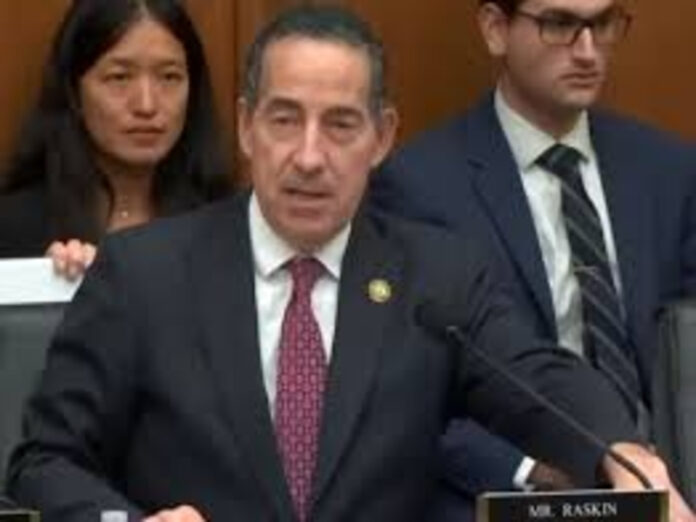
The referral, submitted March 16, 2026, was led by Rep. Jamie Raskin (D-MD), Ranking Member of the House Judiciary Committee, and Sen. Dick Durbin (D-IL), Ranking Member of the Senate Judiciary Committee. The two lawmakers jointly urged Attorney General Pam Bondi to open a perjury investigation into Noem’s sworn testimony before Congress on March 3rd and March 4th.
Sponsorship Of The Criminal Referral;
The criminal referral was formally sponsored and signed by:
- Rep. Jamie Raskin (D-MD), Ranking Member, House Judiciary Committee
- Sen. Dick Durbin (D-IL), Ranking Member, Senate Judiciary Committee
Both lawmakers serve as the top Democrats on their respective judiciary panels, lending institutional weight to the referral within Congress’s oversight authority.
In their joint letter to the Department of Justice, Raskin and Durbin wrote:
“A number of her statements appear to violate criminal statutes prohibiting perjury and knowingly making false statements to Congress.”
They further stated:
“Secretary Noem made a series of demonstrably false statements in a brazen attempt to undermine critical congressional oversight.”
Legal Basis For The Referral;
The lawmakers cited potential violations of federal law, including:
- 18 U.S.C. § 1001 — False statements to the federal government
- 18 U.S.C. § 1621 — Perjury under oath
They emphasized that knowingly providing false testimony to Congress constitutes a criminal offense and noted that such violations are subject to a five-year statute of limitations.
Key Allegations Of False Testimony;
The referral outlines four primary categories of allegedly false or misleading statements made by Noem during her testimony.
1. DHS Compliance with Court Orders
Noem testified that the Department of Homeland Security consistently complies with federal court orders.
Democratic investigators argue that this claim conflicts with documented legal disputes and judicial criticism of DHS actions, including cases in which courts questioned or challenged the department’s compliance.
2. Detention Of U.S. Citizens
Noem stated under oath that DHS does not detain U.S. citizens.
The referral cites evidence and reporting indicating that U.S. citizens have, in fact, been detained during immigration enforcement operations, directly contradicting her testimony.
3. Conditions In Immigration Detention Facilities
During testimony, Noem defended conditions in migrant detention centers, asserting that federal standards were being met.
However, internal audits and oversight findings referenced by lawmakers suggest deficiencies and inconsistencies in detention conditions, raising questions about the accuracy and completeness of her statements.
4. DHS Contracting And Political Influence
A central focus of the referral involves a $220 million DHS advertising campaign tied to immigration enforcement messaging.
Under oath, Noem asserted:
- President Donald Trump approved the campaign in advance
- That no political appointees were involved in the contracting process
- That outside advisers, including Corey Lewandowski, had no influence over contract decisions
Subsequent reporting and public statements have contradicted those claims:
- Trump later publicly denied approving the campaign
- Reports indicate that politically connected firms were involved in the contracting process
- Evidence cited by lawmakers suggests Lewandowski may have had involvement in DHS contracting decisions
Lawmakers argue these discrepancies form a core basis for potential perjury and false statement charges.
Context: Congressional Testimony And Oversight;
The allegations stem from two days of testimony:
- March 3, 2026, Senate Judiciary Committee
- March 4, 2026, House Judiciary Committee
According to the referral, Noem appeared after what lawmakers described as “months of evading” oversight requests, intensifying scrutiny over the accuracy of her sworn statements once she testified.
Political And Legal Response;
Democratic lawmakers acknowledged that the referral may face significant hurdles within the current Justice Department.
In their letter, Raskin and Durbin stated they have “low expectations” that DOJ leadership will pursue the case, citing concerns about political influence.
Meanwhile:
- The Department of Homeland Security has denied wrongdoing
- Allies of Noem have characterized the referral as politically motivated
Legal experts note that congressional criminal referrals do not compel DOJ action, but serve as formal requests for investigation.
Broader Political Fallout;
The referral follows a series of controversies surrounding Noem’s tenure, including:
- Bipartisan scrutiny of DHS spending practices
- Investigations into contracting procedures
- Ongoing disputes over immigration enforcement policies
She was recently removed from her position as DHS Secretary and reassigned within the administration amid mounting political pressure.
What Comes Next;
The Department of Justice now enters a critical decision phase that could determine whether the referral evolves into a criminal case or remains a political flashpoint.
Immediate DOJ Options:
- Preliminary Review
Career prosecutors within DOJ’s Public Integrity Section are expected to conduct an initial assessment of the referral, reviewing transcripts, evidence cited by Congress, and applicable statutes. - Full Criminal Investigation
If sufficient predication is found, DOJ could open a formal investigation, which may include:- Subpoenas for documents and communications
- Interviews with DHS officials and contractors
- Review of internal DHS records and decision-making processes
- Grand Jury Proceedings
Prosecutors could present evidence to a federal grand jury to determine whether criminal charges, such as perjury or false statements, are warranted. - Declination
DOJ may also decline to pursue the matter, either citing insufficient evidence or prosecutorial discretion.
Congressional Follow-Up:
Even absent DOJ action, lawmakers retain several oversight tools:
- Additional hearings or subpoenas
- Release of further investigative findings
- Potential bipartisan pressure if new evidence emerges
Potential Legal Exposure:
If charges were filed and proven, violations of:
- 18 U.S.C. § 1001 (false statements)
- 18 U.S.C. § 1621 (perjury)
could carry fines and possible prison sentences, depending on severity and prosecutorial decisions.
Political Implications:
The case is likely to remain politically charged, with:
- Democrats are framing the referral as a defense of congressional oversight
- Republicans and Noem allies are portraying it as partisan overreach
The outcome could influence future executive branch testimony and congressional enforcement of truthfulness under oath.
Editor’s Note:
This report was written by Jennifer Hodges, Political Editor, and is based on official congressional statements, referral documents, and verified reporting as of March 18, 2026. Allegations contained in the criminal referral have not been adjudicated in a court of law, and no criminal charges have been filed at this time. The Department of Justice has not publicly announced whether it will pursue an investigation.
Support Independent Journalism
Englebrook Independent News is powered by readers like you. Your donation helps us continue delivering trusted local, national, and political news — free for everyone.
Donate Today