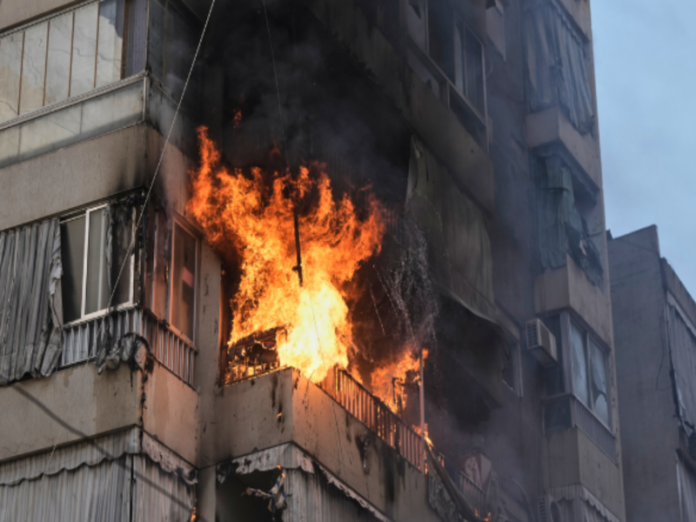
Strike In Tehran Marks Third High-Level Assassination In 48 Hours, Following Deaths Of Ali Larijani and Basij Commander Gholam Reza Soleimani
Wednesday, March 18, 2026, 5:30 P.M. ET. 4 Minute Read, By Jennifer Hodges, Political Editor: Englebrook Independent News,
TEL AVIV, IL.- Iran’s Minister of Intelligence, Esmail Khatib, was killed in a targeted Israeli airstrike in Tehran late Tuesday night, marking a significant escalation in hostilities between Israel and Iran and signaling what analysts describe as a coordinated campaign to dismantle Iran’s senior leadership structure.
Israeli officials confirmed the strike early Wednesday, with Defense Minister Israel Katz stating that Khatib had been “eliminated” in a precision overnight operation. Iranian President Masoud Pezeshkian later publicly confirmed Khatib’s death, making him the third high-ranking Iranian official killed within a 48-hour period.

Precision Strike Inside Iran’s Capital;
According to multiple international reports and official statements, the strike occurred in Tehran and was executed with a high degree of precision consistent with Israel’s recent intelligence-driven operations.
While operational specifics, including delivery system, timing, and surveillance methods, remain classified, Israeli defense officials indicated the strike was based on actionable intelligence and formed part of a broader campaign targeting Iran’s senior security leadership.
Khatib, who had served as Minister of Intelligence since August 2021, was widely regarded as a central figure in Iran’s intelligence apparatus. His ministry oversees counterintelligence, domestic surveillance, and coordination with military and paramilitary organizations, including elements of the Islamic Revolutionary Guard Corps (IRGC).
His death represents a significant disruption to Iran’s intelligence command structure at a time of heightened regional conflict.
Three Senior Officials Killed In 48 Hours;
Khatib’s killing follows two additional high-profile assassinations attributed to Israeli operations:
- Ali Larijani, head of Iran’s Supreme National Security Council and a senior political strategist, was killed in an airstrike between March 16 and March 17.
- Gen. Gholam Reza Soleimani, commander of the Basij militia, was also killed in a separate targeted strike during the same operational window.
Iran’s leadership has acknowledged all three deaths. President Pezeshkian characterized the incidents as “targeted assassinations” and warned of consequences, signaling that retaliation remains under consideration.
The rapid succession of these strikes has raised serious concerns among security analysts regarding the extent of Israeli intelligence penetration of Iran, particularly the ability to track and strike senior officials within the capital.
Strategic Implication: A Decapitation Doctrine;
The elimination of three senior figures in rapid succession points to a deliberate strategic shift toward leadership decapitation.
Each individual held a critical role within Iran’s governing and security framework:
- Esmail Khatib: Head of national intelligence operations and internal security enforcement
- Ali Larijani: Senior coordinator and national security strategist
- Gholam Reza Soleimani: Leader of the Basij, a paramilitary force central to domestic control and mobilization
Collectively, their removal disrupts key nodes within Iran’s command-and-control architecture, potentially impairing both decision-making and operational coordination.
Defense analysts note that such operations are designed not only to remove individuals but to create systemic instability within leadership hierarchies.
A Widening Regional Conflict;
These developments occur within the broader context of the escalating 2026, U.S., Israel–Iran conflict, which has already expanded beyond conventional engagement.
Recent verified developments include:
- Strikes targeting Iranian energy infrastructure, including portions of the South Pars gas field
- Missile exchanges impacting regional areas, including Gulf-adjacent zones
- Increased volatility in global energy markets and maritime shipping routes
The assassination of Iran’s intelligence chief is expected to further intensify tensions, with potential spillover effects across the Middle East.
Profile: Esmail Khatib;
Esmail Khatib, 64, was a cleric and veteran intelligence official with decades of experience within Iran’s security establishment.
- Born: 1961, Qaen, Iran
- Position: Minister of Intelligence (August 2021 – March 2026)
- Role: Oversaw domestic intelligence, counterintelligence, and internal security operations
Khatib was considered closely aligned with Iran’s senior religious leadership and played a central role in managing both internal dissent and external intelligence activities.
His tenure was marked by increased enforcement actions within Iran and expanded intelligence operations amid rising geopolitical tensions.
Outlook: Escalation Or Containment;
With three senior officials eliminated in less than two days, Iran faces a critical test of leadership continuity and operational resilience.
Experts warn that potential responses may include:
- Asymmetric retaliation through regional proxy forces
- Cyber operations targeting Israeli or allied infrastructure
- Expanded military engagement across multiple fronts
At the same time, Israel’s demonstrated ability to conduct precision strikes inside Tehran underscores a significant shift in operational reach and intelligence capability.
Whether these developments will degrade Iran’s strategic capacity or trigger a broader regional conflict remains uncertain.
Editor’s Note;
This report is based on confirmed public statements from Israeli and Iranian officials, as well as reporting from multiple international news organizations as of March 18, 2026. Due to the ongoing nature of the conflict and restrictions on independent verification within Iran, certain operational details, including strike methodology, timing, and collateral impact, remain limited. Englebrook Independent News will continue to monitor developments and provide timely, fact-based updates as additional verified information becomes available.
Support Independent Journalism
Englebrook Independent News is powered by readers like you. Your donation helps us continue delivering trusted local, national, and political news — free for everyone.
Donate Today